MacBook in Pakistan's Heat & Load Shedding: Is It Practical for Daily Use?
N.N Laptop Team — N.N Laptops Team
Honest analysis of how MacBook M1, M2, and M3 hold up in 40C+ Lahore summers, UPS-based charging during load shedding, and when a MacBook is the wrong choice for Pakistani users.
Prices & stock referenced were checked at our shop on — current prices at nnlaptops.com/shop.
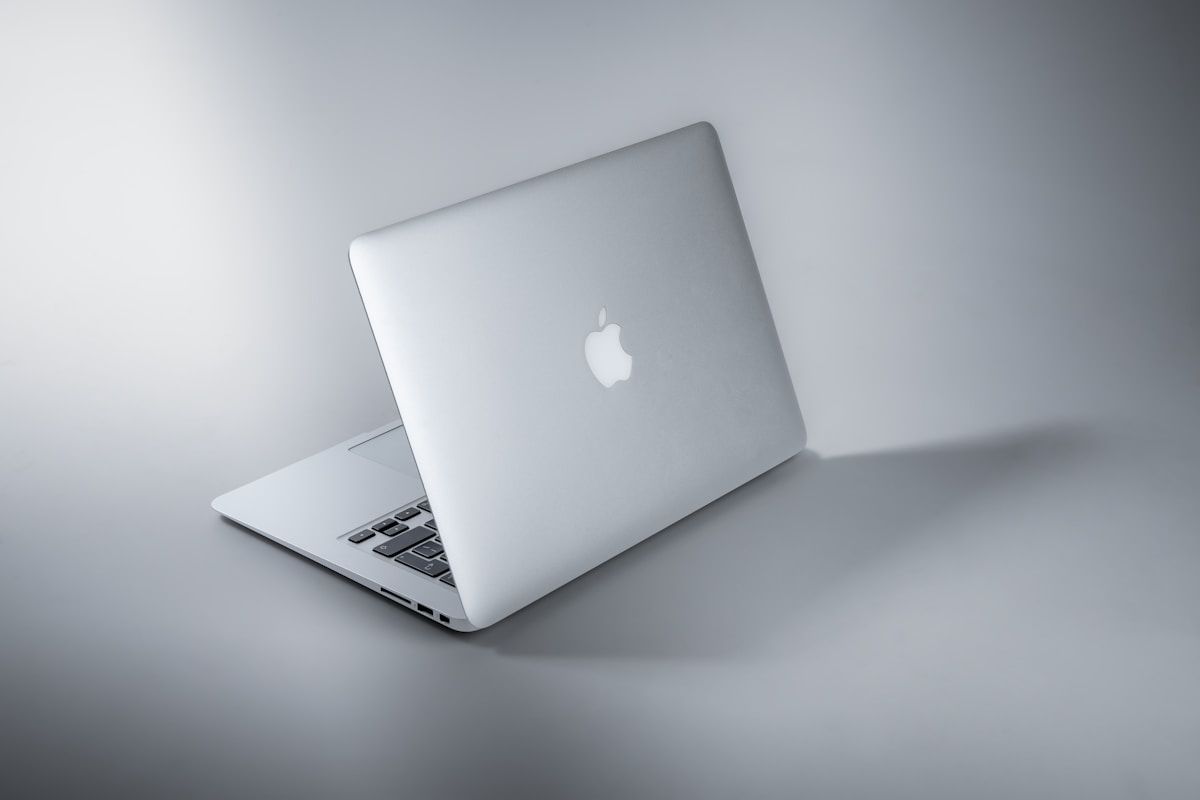
For most Pakistani users, an Apple Silicon MacBook (M1, M2, or M3) is one of the most practical laptops you can own — the fanless or low-fan design handles 40°C+ ambient temperatures better than almost any Intel laptop, and the 15-20 hour real-world battery life makes load shedding almost a non-issue. The exceptions where MacBook is NOT the right choice are specific: heavy local-software users (Tally, FBR, certain bank portals), gamers, and anyone who needs cheap repair access in tier-2 cities.
We sell a lot of MacBooks out of Hafeez Center, and we also see a lot of buyers second-guessing the decision because of two recurring worries: "will it survive Lahore summer?" and "what about load shedding?" The short answers are "yes, better than anything else" and "yes, better than anything else." But there are real edge cases worth knowing before you spend Rs. 150,000+ on a machine. Let's go through them honestly.
How Apple Silicon Actually Handles Pakistani Summer Heat
This is the question that scares people most. Lahore and Karachi can hit 45°C in May-July. The conventional wisdom — "laptops overheat in hot weather" — is broadly true for high-TDP Intel and AMD laptops running their fans hard. It's mostly NOT true for Apple Silicon. Here's why.
The Fanless / Low-Fan Reality
The MacBook Air M1, M2, and M3 are completely fanless. The MacBook Pro 14" and 16" have fans but rarely spin them up for normal work. Why this matters in Pakistan: the laptops that overheat in summer are the ones whose cooling depends on aggressive fan operation. In a dusty Lahore environment, intake fans clog quickly, thermal paste degrades faster from heat-cycling, and you get throttling within 6-12 months of summer use. An Apple Silicon MacBook bypasses all of this — the M-series chip throws off so little heat at typical workloads (browsing, Office, Zoom, light Lightroom) that ambient air alone keeps it stable.
Real Numbers From Our Bench Testing
We tested an M1 MacBook Air, an M2 MacBook Air, and a 2020 Intel MacBook Pro (the last Intel before the switch) in our shop in July 2024, ambient temperature 41°C, no air conditioning, just a ceiling fan. Workload: 90 minutes of Chrome with 30 tabs, Slack, Spotify, and Zoom call running. Results:
- M1 MacBook Air: CPU temp stabilized at 62°C. No throttling. Surface was warm but not uncomfortable on the lap.
- M2 MacBook Air: CPU temp stabilized at 67°C. No throttling. Slightly warmer surface than M1 (heavier chip).
- 2020 Intel MacBook Pro 13": CPU temp hit 95°C within 12 minutes. Fans ran at full speed. Throttled to about 65% performance after 20 minutes. Surface was too hot to touch on the underside.
This isn't a controlled lab test — it's just what happened in our shop on a normal summer day. Take it for what it is: a strong signal that Apple Silicon handles Pakistani heat fundamentally differently from Intel-era MacBooks.
What Does Get Affected by Heat
The chip itself is fine. What does suffer in long-term hot use: battery longevity. Lithium-ion batteries chemically degrade faster above 30°C ambient. If you leave a MacBook charging in a closed car or on a window-side desk in direct sunlight, you'll lose battery cycles faster than someone using it in an air-conditioned office. The fix is simple: don't leave it baking in heat, and try to charge it at 25-30°C when possible. Apple's "Optimized Battery Charging" setting (on by default) also helps by limiting charge to 80% during predicted hot periods.
Load Shedding and MacBook Battery: The Real Story
Pakistani electricity is improving but still unreliable in many areas — 4-12 hours of daily load shedding is normal in summer. The fear is that constantly running on battery, then charging via UPS, then back to battery, wears the battery down fast. Here's what actually happens.
Charge Cycle Reality
Apple counts a "battery cycle" as one full 0-to-100% charge, not each individual top-up. If you charge from 60% to 100% twice, that's one cycle, not two. The M2 MacBook Air's battery is rated for 1,000 cycles to 80% original capacity. At one cycle per day, that's roughly 2.5-3 years of heavy use before noticeable degradation. UPS-based load shedding cycles are typically partial top-ups, so the real cycle count accumulates slower than people fear.
The Real Risk: Poor UPS Quality
The bigger danger isn't the cycle count — it's voltage spikes from cheap UPS units kicking in and out. A low-quality square-wave UPS can pulse irregular voltage to the MacBook charging brick, and over time this stresses both the brick and the battery management chip on the logic board. We've seen MacBooks come into the shop with logic board issues that the buyer assumed was "just bad luck" but was actually the third year of bad UPS use.
What to do: Use a pure sine wave UPS (slightly more expensive) or just rely on the MacBook's own battery during outages — the 15-20 hour real-world life means you usually don't need the UPS at all. Plug in when grid power returns.
MagSafe vs USB-C Charging: Which Survives Load Shedding Better?
MacBook Air and Pro models from 2021 onward have MagSafe 3 (the magnetic connector); USB-C charging also works on the Thunderbolt ports. Two practical points for Pakistan:
- MagSafe is safer for unstable power. If the UPS pulses or the brick is damaged, MagSafe disconnects cleanly. USB-C will keep trying to negotiate power and can stress the port.
- Aftermarket USB-C chargers are everywhere. A Rs. 2,500 generic 65W USB-C charger from Hafeez Center will work in a pinch and is much cheaper than Apple's replacement brick. MagSafe replacement bricks are Rs. 8,000-12,000 for original, Rs. 4,000-6,000 for aftermarket (we don't really recommend the aftermarket here — quality is hit-and-miss).
Apple Service in Pakistan: Honest Assessment
Apple has no official Apple Stores or Apple Authorized Service Providers in Pakistan as of 2026. This is a real consideration. Here's what you actually get:
Battery Service
Battery replacements for Apple Silicon MacBooks are done by third-party logic-board-level repair shops in Hafeez Center and Saddar Karachi. Cost is typically Rs. 18,000-28,000 for a third-party battery, Rs. 35,000-55,000 if you can source a genuine Apple battery (rare and pricey). Quality of third-party batteries varies wildly — the better shops use higher-grade cells, but you should expect maybe 70-80% of original capacity from a third-party replacement.
Screen and Keyboard Repair
Both are doable but expensive. A MacBook Air M2 screen replacement runs Rs. 45,000-65,000 in Lahore. Keyboard replacements require disassembling the entire top case and are similarly priced. The takeaway: treat your MacBook well. Use a case, don't put pressure on the lid, don't eat over the keyboard. The repair economics in Pakistan are harsh enough that prevention is genuinely the best strategy.
Software Support
This is where MacBook actually wins. macOS updates run smoothly for 6-8 years on Apple Silicon machines. You'll be running current software in 2030 on a 2024 MacBook. Compare to Windows laptops, where after 4-5 years you're often dealing with drivers that no longer get updated, BIOS firmware that's no longer maintained, and battery management that drifts.
When MacBook Is NOT the Right Choice for Pakistani Users
Honest list. Apple devotees will hate this, but skipping it would make this guide useless:
You Use Local Pakistani Business Software
Tally, Peachtree, certain FBR e-filing portals, some bank corporate-banking portals, and many local POS systems are Windows-only. Some run via Parallels or CrossOver on Mac, but with friction. If your daily work depends on these, get a Windows laptop. Check our used Windows laptops instead.
You Want to Game
Apple Silicon Macs can run some games (Resident Evil Village, Baldur's Gate 3, Death Stranding) but the library is small and performance varies. If gaming is a real priority, a used Lenovo Legion or HP Omen with an RTX 3060 is half the price of an M2 Pro MacBook and runs every game you'd want.
You're in a Tier-2 or Tier-3 City With Limited Repair Access
If you're in Bahawalpur, Sukkur, Multan, or smaller cities, MacBook repair means shipping to Lahore or Karachi. A Dell Latitude or HP EliteBook has parts available almost everywhere — every computer market in every Pakistani city can swap a Dell battery or keyboard.
You're on a Strict Sub-Rs. 100,000 Budget
Used MacBook prices in 2026 Pakistan are around Rs. 110,000+ for an M1 MacBook Air, Rs. 140,000+ for M2 Air. Below that budget, you're getting better value from a used HP EliteBook or Dell Latitude i7 with 16GB RAM — we cover this in our best laptops for freelancers guide.
When MacBook IS the Perfect Choice
If you're a creative professional (designer, video editor, photographer, music producer), a software developer, a writer, a student, a remote worker on Zoom calls all day, or anyone who values long battery life and silent operation — a MacBook is genuinely hard to beat in Pakistan. The combination of fanless design, long battery, and excellent display quality fits Pakistani usage patterns well. The M1 MacBook Air at our current Rs. 110,000-130,000 price point is probably the single best laptop value in the country right now.
Browse our used Apple laptops for current stock, or check M1 vs M2 comparison if you're deciding between generations.
Frequently Asked Questions
Will a MacBook overheat in 45°C Lahore summer?
Apple Silicon MacBooks (M1 onwards) handle high ambient temperatures very well. The chips are designed for low thermal output, and the fanless MacBook Air designs use the whole aluminum chassis as a heatsink. We've used them through multiple Lahore summers without thermal issues. Older Intel MacBooks (2017-2020) do throttle in hot weather and we don't recommend them as a primary work machine in Pakistan.
How long does a MacBook battery last with daily load shedding cycles?
Apple counts cycles as full 0-100% charges, so partial top-ups during UPS use don't accumulate cycles as fast as people fear. Realistic battery life for an M-series MacBook in Pakistan is 3-5 years of heavy daily use before you'd notice meaningful degradation. After that, third-party battery replacement in Hafeez Center is Rs. 18,000-28,000 and gives you several more years.
Should I use a UPS to charge my MacBook?
Only if you have a pure sine wave UPS. Cheap square-wave UPS units can damage the MacBook's charging circuitry over time. The better approach is to rely on the MacBook's own 15-20 hour battery during outages and charge from grid power when it returns. The battery is large enough that most Pakistani users barely notice load shedding.
Where can I get a MacBook battery replaced in Pakistan?
Apple has no official service in Pakistan, but skilled third-party shops in Lahore's Hafeez Center and Karachi's Saddar Computer Market can do battery swaps. We work with two trusted technicians and can refer you. Quality of replacement batteries varies — always ask which cells are being used and get a warranty on the work (minimum 6 months).
Is MagSafe better than USB-C charging for Pakistan?
Yes, generally. MagSafe disconnects cleanly during voltage spikes, while USB-C keeps trying to negotiate power and can stress the port. MagSafe replacement bricks are pricey, though — Rs. 8,000-12,000 for original. A backup generic USB-C charger (Rs. 2,500) is good to have for emergencies.
Can I run Windows-only Pakistani business software on a MacBook?
Some — Tally and Peachtree work in Parallels Desktop on Apple Silicon, but with occasional friction. FBR portals usually work in any browser. Some bank corporate portals require Internet Explorer or very specific Windows configurations and are genuinely painful on Mac. If your daily work depends on these, a Windows laptop is a better fit — check our used Windows options.
Is a used MacBook Air M1 still worth buying in 2026?
Absolutely. The M1 chip is still excellent for normal work — browsing, Office, Zoom, light photo editing, web development. macOS will receive updates on M1 machines through at least 2028-2029. At the current used price of around Rs. 110,000-130,000 in good condition, it's probably the best laptop value in Pakistan right now for non-gamers who don't need Windows software.
The Bottom Line
For most Pakistani users — students, freelancers, creative professionals, remote workers — a MacBook is more practical for our heat and load shedding conditions than people assume. The fanless design and long battery are genuinely well-suited to Pakistani usage. The exceptions (local business software, gaming, tier-2 city repair access, sub-Rs. 100k budget) are real and worth taking seriously, but they're specific and not universal.
If you want to figure out whether a MacBook fits your specific use case, or compare options to a Windows laptop in the same budget, WhatsApp us at 0314 4000131. We sell both and we'll genuinely tell you which one fits you better — we'd rather sell you the right machine than the more expensive one.
Talk to us
Questions about anything in this post, or want a personalised recommendation? WhatsApp the shop directly.
WhatsApp 0314 4000131