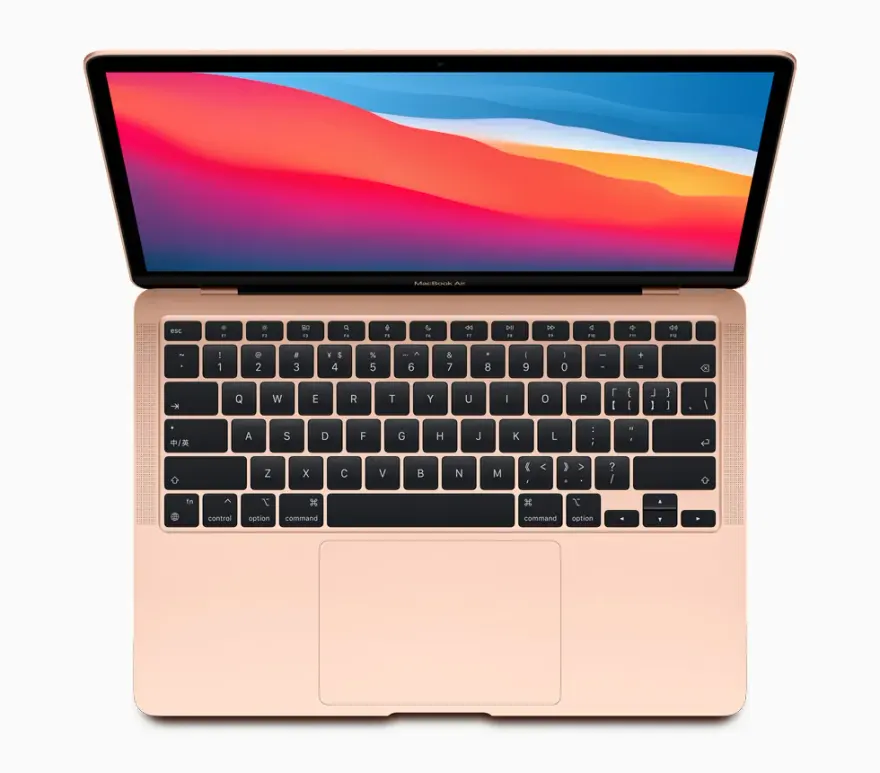
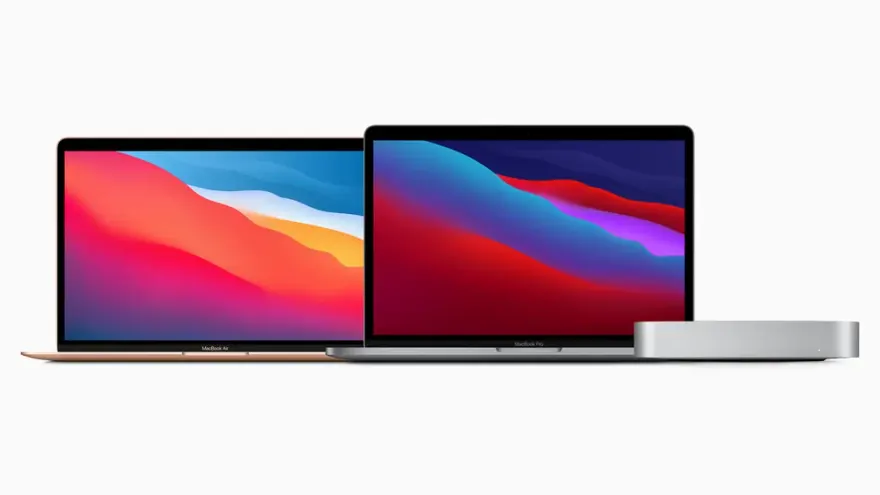
Apple MacBook Air 13 2020 M1 8GB 256GB Apple M1 8GB 256GB Used
- Apple M1 (5 nm)
- 8GB unified RAM · 256GB NVMe SSD
- 13.3-inch · 2560×1600 Retina IPS True Tone
- 15 to 18 hours mixed use
- 1.29 kg
Same M1 chip, different chassis — fan vs fanless, Touch Bar vs none. Is the Pro 13 premium worth Rs. 35,000+ in Pakistan?


The MacBook Air vs MacBook Pro 13 M1 question is a daily conversation at our shop, mostly from Pakistani buyers who want a MacBook but are confused by Apple's product positioning. The Pro 13 M1 was Apple's last laptop with the 2016-era chassis (same as Intel MacBook Pro), which means it retained the Touch Bar that Apple discontinued on every other model. This makes the Pro 13 a confusing transitional product — pro silicon in an old body. The Air M1, by contrast, is the laptop that defined Apple Silicon's value proposition: fanless, light, all-day battery, premium for less money than a Pro. In Pakistan's used market, both arrive from US/UK trade-ins, with the Air outnumbering the Pro 13 roughly 3-to-1. Pricing differential is Rs. 35,000-50,000, which is genuinely meaningful for Pakistani buying power. We see roughly 70% of buyers correctly choose the Air after we explain the actual technical differences. The remaining 30% specifically need sustained performance (iOS development, video editing) and correctly pay the Pro premium.
| Use case | Winner | Reasoning |
|---|---|---|
| University students (any program) | Apple MacBook Air 13 2020 M1 8GB 256GB Apple M1 8GB 256GB Used | Air M1 saves Rs. 35,000-50,000 for identical performance in student workloads. The savings fund external monitor, mouse, AppleCare-equivalent insurance. |
| iOS / macOS development (Xcode) | Apple MacBook Pro 13 2020 M1 Apple M1 8GB 256GB Retina Lahore | Pro 13's fan sustains peak M1 performance during large Xcode builds. Air M1 throttles after 5-10 minutes of sustained compilation, slowing iteration cycles. |
| Video editing (Final Cut Pro) | Apple MacBook Pro 13 2020 M1 Apple M1 8GB 256GB Retina Lahore | Pro 13's active cooling sustains 1080p/4K Final Cut exports without throttling. Air M1 works for 5-minute clips but slows on longer exports. |
| Web development (JavaScript, Python) | Apple MacBook Air 13 2020 M1 8GB 256GB Apple M1 8GB 256GB Used | Web dev is burst workload — Air M1 handles VS Code, browser dev tools, Node.js identically to Pro 13 with no thermal issues. |
| Writers, journalists, content creators | Apple MacBook Air 13 2020 M1 8GB 256GB Apple M1 8GB 256GB Used | Air M1's silent fanless design suits quiet writing environments. 1.29 kg weight is genuinely lighter for daily café/co-working carry. |
| Music production (Logic Pro) | Apple MacBook Pro 13 2020 M1 Apple M1 8GB 256GB Retina Lahore | Pro 13's fan handles 75+ track sessions with virtual instruments. Air M1 hits thermal limits around 50 tracks. |
| Photography (Lightroom) | Tied | Both handle Lightroom RAW culling identically. Pro 13's brighter display helps color grading slightly but Air's screen is fine. |
| Office worker / corporate user | Apple MacBook Air 13 2020 M1 8GB 256GB Apple M1 8GB 256GB Used | Office workflows are burst-load (open Excel, edit, save, switch to email). Air M1 is more than sufficient. Save the premium. |
MacBook Air M1 at Rs. 130,000-150,000 is the single best laptop value in Pakistan in 2026. You're getting Apple Silicon performance that beats every Intel laptop ever made, 15-18 hour battery, fanless silent operation, premium aluminium chassis, and Retina display — for the price of a mid-tier Windows ultrabook. Pricing reflects 5 years of accumulated supply from US trade-ins. Below Rs. 125,000 suggests iCloud-locked or compromised hardware. Above Rs. 155,000 stock-standard is a markup. The 16GB BTO upgrade at Rs. 175,000-195,000 is worthwhile for power users.
MacBook Pro 13 M1 at Rs. 165,000-195,000 commands a Rs. 35,000-50,000 premium over the Air M1 for marginal improvements: active cooling fan, Touch Bar, brighter display, slightly larger battery. The premium is justified for buyers who specifically need sustained performance (large Xcode builds, Final Cut Pro long exports, Logic Pro heavy sessions). For everyone else, the premium pays for hardware you won't use. The Pro 13 was discontinued by Apple in 2022 because of this poor positioning. If you have Rs. 195,000+ budget, consider the MacBook Air M2 (newer design, MagSafe, brighter display) at similar pricing.
Salman is a freelance React/Node.js developer earning Rs. 200,000+/month. He works from his home office and occasionally cafés. Budget Rs. 145,000. We recommend the MacBook Air M1 — his workflow is burst-load (browser, VS Code, terminal), not sustained-load. The Air's silence suits his quiet home office better than the Pro 13's occasional fan spinup. The Rs. 35,000+ saved funds an external monitor and a year of cloud-service subscriptions.
Hamza builds an iOS app at a Karachi fintech startup. His Xcode projects have 50+ Swift packages and build times matter for iteration speed. Budget Rs. 180,000. The Pro 13 M1 wins clearly — large Xcode builds run at sustained peak performance with the fan, vs Air M1 throttling after 5-7 minutes. The Touch Bar customization speeds up some Xcode operations. The Rs. 35,000+ premium pays back in saved build time within 2-3 months.
Aisha is a 2nd-year LUMS undergraduate. Budget Rs. 145,000. Her workflow is Office, Zoom, browser-heavy research, occasional Photoshop. The Air M1 is the rational choice — her workloads don't stress the M1, the silent fanless design suits library work, the lighter 1.29 kg weight matters for daily backpack carry. The Rs. 35,000+ saved is genuinely meaningful for a student.
Mahnoor edits short-form videos in CapCut for her 50,000-follower Instagram. Budget Rs. 170,000. The Pro 13 M1 wins narrowly — CapCut video exports benefit from sustained performance, the slightly brighter display helps in her well-lit content studio. The Touch Bar provides quick access to brightness during recording. The Rs. 25,000 premium pays back in faster export workflow.
Our honest take: for 80% of Pakistani buyers asking 'Air M1 or Pro 13 M1', the Air M1 is the correct choice. The same M1 chip means burst-workload performance is identical, the silent fanless design is a genuine advantage for most environments, the 1.29 kg weight matters for daily carry, and the Rs. 35,000-50,000 saved is real money. The Pro 13 M1 wins only for specific sustained-load workflows: large iOS app development with frequent Xcode builds, video editing with long exports, music production with many tracks. If you do those things daily, the Pro 13's fan justifies the premium. If you don't, save the money. The Touch Bar alone is not a good reason to choose the Pro 13 — Apple itself discontinued it on every other model. For Rs. 195,000+ budget, also consider the MacBook Air M2 (newer chassis, MagSafe, brighter display, more refined). Both Air M1 and Pro 13 M1 carry our 15-day testing warranty with full refund or replacement on genuine fault. We always verify Activation Lock clearance, run battery health diagnostics, and provide written documentation. For consultation, WhatsApp 0314 4000131 — we'll ask about your specific workflow and recommend the rational choice. We sell either with the same margin and no commission incentive.
| Spec | LeftApple MacBook Air 13 2020 M1 8GB 256GB Apple M1 8GB 256GB Used | RightApple MacBook Pro 13 2020 M1 Apple M1 8GB 256GB Retina Lahore |
|---|---|---|
CPU | Apple M1 (5 nm) | Apple M1 (5 nm) |
Cores / Threads | 8 cores (4P + 4E), unified memory | 8 cores (4P + 4E), unified memory |
RAM (default) | 8GB unified | 8GB unified |
RAM (max) | 16GB unified (soldered, BTO only) | 16GB unified (soldered, BTO only) |
Storage | 256GB NVMe SSD | 256GB NVMe SSD |
GPU | Apple M1 7-core or 8-core GPU | Apple M1 8-core GPU (standard) |
Display size | 13.3-inch | 13.3-inch |
Display resolution | 2560×1600 Retina IPS True Tone | 2560×1600 Retina IPS True Tone (brighter, 500 nits) |
Refresh rate | 60 Hz | 60 Hz |
Battery (Wh) | 49.9 Wh | 58.2 Wh |
Battery (claimed) | 15 to 18 hours mixed use | 17 to 20 hours mixed use |
Weight | 1.29 kg | 1.40 kg |
Ports | 2× USB-C (Thunderbolt 3), 3.5 mm | 2× USB-C (Thunderbolt 3), 3.5 mm |
Keyboard | Magic Keyboard, 1.0 mm travel, backlit, no Touch Bar, Touch ID | Magic Keyboard, 1.0 mm travel, backlit, Touch Bar + Touch ID |
Build | Recycled aluminium unibody, wedge profile, FANLESS silent operation | Recycled aluminium unibody, ACTIVE COOLING FAN for sustained workloads |
Price (N.N Laptops Lahore) | Rs. 145,000 | Rs. 145,000 |
Best for | Students, writers, light coders, anyone valuing silence and battery | Sustained workloads (compiles, exports), Touch Bar fans, slightly brighter display |
Reliability score | 9.5 / 10 | 9.4 / 10 |
Both have the identical Apple M1 chip — same CPU cores, same Neural Engine, same memory architecture. The differences come down to the chassis and what it lets the M1 do. The MacBook Air M1 is FANLESS — completely silent, but throttles after sustained high loads (long video exports, big code compiles). The MacBook Pro 13 M1 has an active cooling fan that lets the same chip sustain peak performance indefinitely. In burst workloads (opening apps, browsing, light Photoshop), they perform identically. In sustained workloads (Final Cut Pro 4K export, large Xcode build, Logic Pro session with many plugins), the Pro 13 is 5-15% faster. The Air also lacks the Pro 13's Touch Bar, has a slightly dimmer display (400 nits vs 500 nits), weighs 110 grams less (1.29 vs 1.40 kg), and has a smaller battery (49.9 Wh vs 58.2 Wh) — though battery life is actually similar because the Air doesn't need to power a fan. In Lahore, Air M1 sits at Rs. 130,000-150,000; Pro 13 M1 at Rs. 165,000-195,000. For 80% of Pakistani buyers — students, writers, web developers, office workers — the Air M1 wins on value and silence. The Pro 13 wins for sustained-load workflows (iOS development with large projects, video editing, music production) where the fan matters. Don't pay the Pro premium just for the Touch Bar — Apple itself killed it on every other Mac.
MacBook Air M1, almost always. Saves Rs. 35,000-50,000 for the same chip. Student workflows (Office, Zoom, browser, occasional Photoshop) are burst workloads where the Pro 13's fan advantage doesn't matter. The Air is also lighter for daily backpack carrying. Pick the Pro 13 only if the student specifically does iOS development with large Xcode projects or serious video editing.
Three reasons: active cooling fan adds cost, Touch Bar adds cost (and complexity), brighter 500-nit display vs Air's 400-nit. The Pro 13 also has a slightly larger battery. For workflows that benefit from sustained performance, these justify the premium. For workflows that don't, you're paying for hardware you won't use.
Divisive. Some users love it (quick access to brightness, volume, custom shortcuts in apps). Many users hate it (lacks tactile feedback, replaces useful F-keys, distracting). Apple itself discontinued the Touch Bar on every other Mac except the now-discontinued Pro 13 M2 and M1 generation. If you're not sure, you don't need it.
Barely. The Pro 13 M1's fan is very quiet during light use (often inaudible). Under heavy load (Final Cut Pro export, sustained compile), the fan spins up audibly but it's still quieter than most Windows laptops. The Air M1's fanless design means absolute silence under any load — a noticeable difference if you work in quiet environments.
Both excellent. Air M1 (49.9 Wh, fanless): 15-18 hours mixed use. Pro 13 M1 (58.2 Wh, with fan): 17-20 hours mixed use. The Pro 13 has slightly more battery and the larger battery offsets the fan's small power draw. Real-world difference is 2-3 hours — meaningful for digital nomads, marginal for office workers.
Almost never. The Air M1's fanless design throttles only after 5-10 minutes of sustained 100% CPU/GPU load (long video exports, big code compiles, intensive benchmarks). For normal use (browser, Office, Zoom, light coding), no throttling. The throttle, when it happens, drops performance 15-25% — noticeable but not catastrophic.
Yes, both run well for moderate projects. Final Cut Pro: 1080p timelines no problem, 4K timelines with simple effects fine. Logic Pro: 50-tracks comfortable, 75-track sessions hit thermal limits. For larger projects in either app, Pro 13 M1 sustains better performance.
For browsing, Office, light coding — yes, the unified memory architecture is genuinely more efficient than Windows DDR4. For video editing, large Photoshop files, heavy Xcode projects — no, get the 16GB BTO upgrade. If unsure, get 16GB if affordable.
Air M1: 400 nits, Pro 13 M1: 500 nits. The Pro is noticeably brighter in bright environments (windows, outdoor work). Indoors at reasonable brightness, both look identical. For Pakistani cafés with bright sun-facing windows, the Pro's brightness helps.
Yes, both support clamshell mode with external monitor + USB-C keyboard/mouse. The Air M1 and Pro 13 M1 both drive one external monitor (M1 limitation — Pro/Max chips support more). For dual external monitors, you need a Display Link adapter (Rs. 12,000-18,000).
Pro 13 M1 holds resale slightly better (5-10% at year 2) because pro buyers continue seeking it. Air M1 has higher supply volume so depreciation is slightly faster. Neither holds value as well as the M1 Pro / M1 Max 14-inch which are firmly pro-tier.
Air M1 is sufficient for student-level Adobe Illustrator, Photoshop, InDesign, Figma work. Real-world performance difference in design apps is 5-10% — not enough to justify Pro premium for student. Save the difference for a Wacom tablet or external monitor.
No on both. Apple Silicon Macs have soldered RAM and soldered SSD. Whatever you buy is what you have for the laptop's life. Choose carefully. We recommend at least 256GB SSD (fills up faster than expected) and 16GB RAM if any heavier workflow.

One email per month, max. We tell you what new used laptops just landed at Hafeez Center, with prices. Skip the WhatsApp-spam — read on your own time. Unsubscribe in one click.