Skip to content
N.N Laptop logo
Head-to-head · Ultrabook

Asus ZenBook 14 OLED vs Lenovo Yoga 7i

Two premium 14-inch consumer ultrabooks under Rs. 175,000 — OLED display vs convertible 2-in-1 touch flexibility. Which fits the Pakistani buyer better?

Best for

Which laptop wins by use case?

Programming
Tie
Gaming
Tie
Battery life
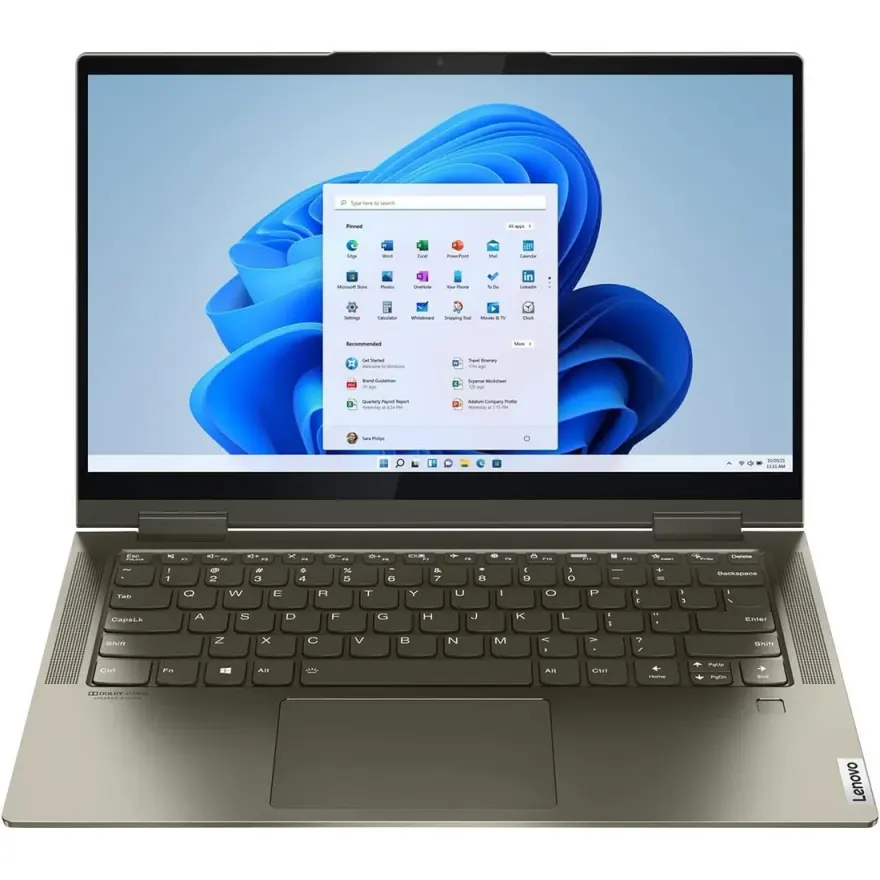
Lenovo Yoga 7i 14ITL5 i7-1165G7 16GB 512GB Touch Used Lahore
Value
Tie
Portability
Lenovo Yoga 7i 14ITL5 i7-1165G7 16GB 512GB Touch Used Lahore
Pakistan context

How this rivalry plays out in Pakistan.

The premium consumer ultrabook segment under Rs. 175,000 sits in an interesting spot in the Pakistani laptop market — it's the bracket where buyers want a 'real' premium laptop but can't quite stretch to the Rs. 250,000+ flagship tier (MacBook Air, ZenBook S, ThinkPad X1 Carbon). Both the ZenBook 14 OLED and Yoga 7i target this segment well. Pakistani buyers in this bracket fall into clear profiles: university students whose parents are upgrading their academic-cycle laptop (typically engineering, business, design, or computer-science majors), early-career professionals (1-3 years into their first job) who finally have personal budget for a quality laptop, and young entrepreneurs running side-hustles who want a premium device that signals professionalism to clients. The ZenBook 14 OLED dominates buyer attention among design students (NCA Lahore, Indus Valley Karachi, NUST design programmes) because the OLED panel transforms their Photoshop/Illustrator workflows. The Yoga 7i sells strongly to medical students (Aga Khan, FMH) and law students who annotate PDFs heavily and benefit from the convertible touchscreen + stylus combination. Both arrive in Pakistan via authorised resellers and grey-market imports; used pricing at our shop runs Rs. 30,000-50,000 below new-laptop pricing at Future Trends or authorised dealers. Battery life matters meaningfully here — Pakistani load-shedding still affects most cities 2-4 hours daily, so 10+ hour real battery life is a practical requirement, not just a spec sheet number. Both deliver this comfortably.

By use case

Which wins for which workflow?

Use caseWinnerReasoning
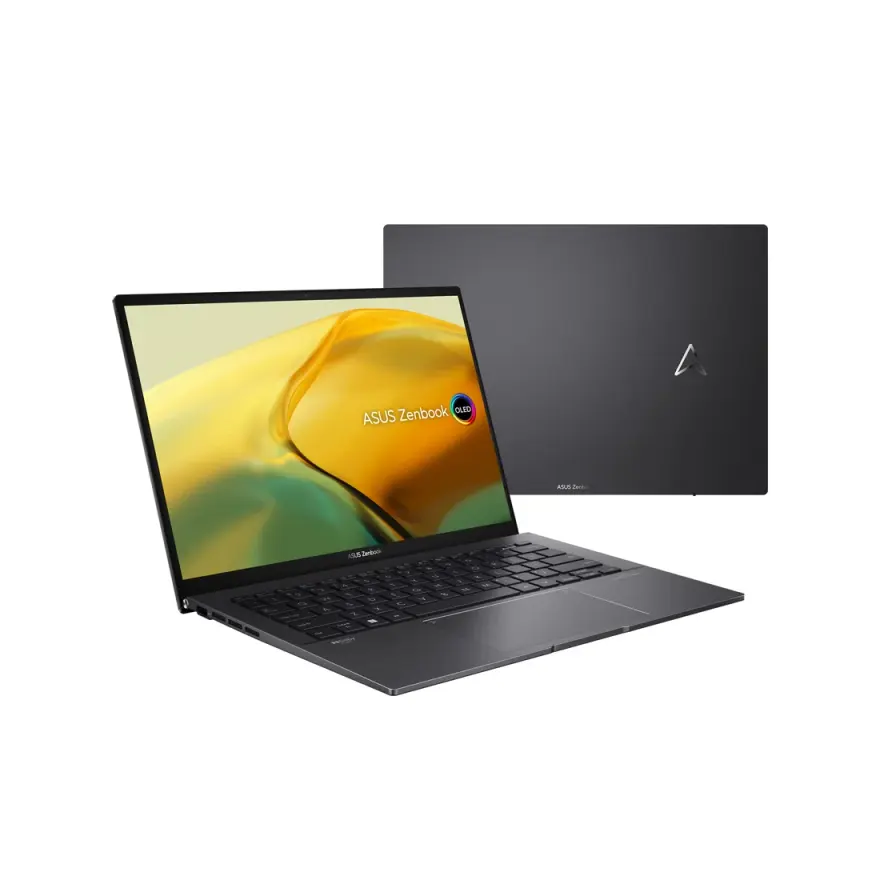
Photo editing (Lightroom, Photoshop)Asus ZenBook 14 OLED UM3402YA Ryzen 7 7730U 16GB 1TB Used LahoreZenBook's 2.8K OLED panel with 100% DCI-P3 colour gamut is transformative for photo editing — colours look accurate to print, true blacks help in low-key photography work, and the higher resolution helps with detail work.
Note-taking with stylus (medical / law students)Lenovo Yoga 7i 14ITL5 i7-1165G7 16GB 512GB Touch Used LahoreYoga 7i's 360° convertible hinge + active stylus support (Lenovo Pen, Rs. 8,000-12,000) make handwritten notes natural during lectures. ZenBook's non-touch panel can't do this at all.
Software development (web, mobile, backend)Asus ZenBook 14 OLED UM3402YA Ryzen 7 7730U 16GB 1TB Used LahoreZenBook's Ryzen 7 7730U 8-core CPU compiles, builds, and runs Docker 30-40% faster than Yoga 7i's 4-core i7-1165G7. The OLED also reduces eye strain in 10-hour coding sessions.
Office productivity (Word, Excel, browser, Slack)TiedBoth run office workloads identically — i7-1165G7 single-thread keeps up with Ryzen 7 in browser/Office tasks. Pick on form factor preference and panel preference.
Content consumption (Netflix, YouTube, movies)Asus ZenBook 14 OLED UM3402YA Ryzen 7 7730U 16GB 1TB Used LahoreZenBook's OLED at 2.8K 90 Hz delivers cinema-quality blacks and rich colours that no IPS panel matches. Yoga 7i's FHD touch panel is fine but visibly worse for streaming content side-by-side.
Frequent travel / presentationsLenovo Yoga 7i 14ITL5 i7-1165G7 16GB 512GB Touch Used LahoreYoga 7i's tent and stand modes enable easy in-flight movie watching, presenting in cramped meeting rooms, and using as a digital signage display for client demos. Convertible flexibility wins.
Light gaming (esports + indie titles)TiedIris Xe (Yoga 7i) and Radeon (ZenBook) handle Valorant, CS:GO, indie titles, and emulators identically at low-medium 720p-1080p settings. Both are 'casual gaming' machines, not gaming laptops.
Long-term ownership (4-5 years)Lenovo Yoga 7i 14ITL5 i7-1165G7 16GB 512GB Touch Used LahoreYoga 7i's IPS panel has zero burn-in risk, vs OLED panels that can show static-image retention after 2-3 years of heavy use (Windows taskbar, browser shadows). For long-term durability, IPS wins.
Is the price fair?

Pakistani street-price reality check.

Left option

Asus ZenBook 14 OLED UM3402YA Ryzen 7 7730U 16GB 1TB Used LahoreRs. 175,000

The Asus ZenBook 14 OLED UM3402YA Ryzen 7 7730U / 16GB / 1TB / 2.8K OLED at Rs. 155,000-175,000 in Lahore is fair pricing for a 2-3 year old premium consumer ultrabook in 2026. The depreciation from new (~Rs. 230,000 authorised reseller pricing) reflects typical 30-35% drop on premium Windows ultrabooks at the 2-year mark. Above Rs. 185,000 stock-standard is a markup unless the unit has 32GB RAM BTO (rare). Below Rs. 145,000 should trigger inspection — check OLED panel for burn-in using static test patterns, verify battery wear under 25%, inspect the all-aluminium chassis for dents or hinge wear. The OLED panel is the defining feature, so confirm it's pristine and shows no burn-in patterns from previous user's taskbar or browser shadows. Battery replacement at year 4 is Rs. 14,000-18,000 for the 75 Wh internal cell.

Right option

Lenovo Yoga 7i 14ITL5 i7-1165G7 16GB 512GB Touch Used LahoreRs. 82,000

The Lenovo Yoga 7i 14ITL5 i7-1165G7 / 16GB / 512GB / 14-inch FHD Touch at Rs. 140,000-160,000 in Lahore is fair pricing for a 3-4 year old premium convertible ultrabook in 2026. The depreciation from new (~Rs. 210,000 authorised reseller pricing) reflects typical 30-40% drop on premium convertible laptops at the 3-year mark. Above Rs. 170,000 stock-standard is a markup unless the unit has 1TB SSD BTO upgrade or premium touchscreen variant. Below Rs. 130,000 should trigger inspection — convertible laptops endure more hinge stress than clamshells, so verify 360° hinge moves smoothly through full rotation without play or clicks. Test the touch screen for accuracy and stylus support if you plan to use it. Battery replacement at year 4 is Rs. 13,000-17,000 for the 71 Wh internal cell.

Real buyer profiles

Who we'd recommend each one to.

Lahore design school student

Mahnoor is a 2nd-year graphic design student at NCA Lahore. Her workflow is primarily Adobe Illustrator, Photoshop, and InDesign for academic projects plus occasional freelance logo design earning Rs. 25,000-50,000/month. Budget Rs. 170,000 from her father. We recommend the Asus ZenBook 14 OLED — the 2.8K OLED panel with 100% DCI-P3 is transformative for her design work, her clients can trust the colour accuracy of her deliverables, and the Ryzen 7 7730U handles Photoshop/Illustrator with massive headroom. The Rs. 15,000 premium over the Yoga 7i pays back in better client work outcomes.

Karachi 2nd-year medical student

Hassan is a 2nd-year MBBS student at Aga Khan University in Karachi. His workflow is heavy PDF annotation (medical textbooks, research papers), handwritten notes during ward rounds, and Zoom-heavy classes during COVID-style remote weeks. Budget Rs. 155,000. We recommend the Lenovo Yoga 7i — the 360° convertible + stylus support transforms his note-taking and PDF annotation workflows, the 11-15 hour battery handles long hospital shifts, and the touchscreen feels natural for medical app interactions. The ZenBook's superior CPU and OLED don't help his specific use case.

Islamabad early-career software developer

Bilal is 24, working his first job at an Islamabad startup making Rs. 90,000/month. He's been saving for a personal laptop separate from his work-issued machine. Budget Rs. 165,000. We recommend the ZenBook 14 OLED — Ryzen 7 7730U's 8 cores make personal-project compilation and Docker meaningfully faster than the Yoga 7i, the OLED panel reduces eye strain during 4-hour evening coding sessions, and the 1TB SSD comfortably holds multiple development environments. The convertible touch of Yoga 7i doesn't help his coding workflow.

Faisalabad textile-business heir

Saqib is 27, taking over his father's textile-export business in Faisalabad. He needs a premium laptop for Excel-heavy operations work, occasional design review of buyer-submitted artwork, presentations to international buyers via Zoom, and frequent travel to Karachi/Lahore for trade meetings. Budget Rs. 175,000. We recommend the ZenBook 14 OLED — the premium aluminium chassis signals professionalism in buyer meetings, the OLED panel makes artwork review accurate, and the Ryzen 7 handles his heavy Excel modelling. The Yoga 7i's convertible feature isn't relevant to his use case.

Before you buy

What to check on either of these used.

  • ZenBook 14 OLED specifically — inspect the OLED panel for burn-in using full-white and full-grey backgrounds in a dark room. Check for static-image retention from Windows taskbar or browser shadows. Used OLED panels with burn-in are unusable for design work and warrant a Rs. 40,000-50,000 discount.
  • ZenBook 14 OLED — verify the 90 Hz refresh rate is enabled in Display Settings → Advanced. Some units ship at 60 Hz default; confirm the higher refresh actually works.
  • ZenBook 14 OLED — test the NumberPad 2.0 trackpad-integrated numpad by enabling it (icon top-right of trackpad). Some used units have failed NumberPad sensors that the seller may not disclose.
  • ZenBook 14 OLED — check the all-aluminium chassis for dents along bottom edges (sign of repeated drops onto desks) and lid scratches that suggest careless transport.
  • Yoga 7i specifically — most important: cycle the 360° convertible hinge through full rotation (clamshell → tent → stand → tablet → back) 10-15 times. Listen for clicks, scrapes, or felt resistance changes that indicate hinge wear. Replacement hinges cost Rs. 9,000-13,000.
  • Yoga 7i — verify the touchscreen responds accurately across the full screen area by drawing in MS Paint. Touch dead zones at edges or corners indicate digitiser damage that's expensive to repair.
  • Yoga 7i — if stylus support matters, test with a real active stylus (Lenovo Pen). Verify pressure sensitivity works and palm rejection functions correctly in tablet mode.
  • Both — verify all USB-A and USB-C ports work with real devices. Both have limited port counts so any failed port reduces usability significantly.
  • Both — check battery wear with HWiNFO64. Above 25% wear means battery replacement (Rs. 13,000-18,000) is approaching.
  • Both — verify Windows 11 Pro activates with digital licence after fresh install. Some used units come with non-genuine Windows that deactivates on reset.
  • Both — confirm Wi-Fi 6 / Bluetooth 5 work correctly. Connect to a known Wi-Fi 6 network and verify maximum supported speeds. Wireless chip failures occasionally happen on used units.
  • Both — test the webcam in Windows Camera app. 720p webcam should produce clear daylight images. Some used units have failed webcams that need motherboard-level repair (Rs. 8,000-12,000).
Our take

NN Laptops Hafeez Center — the honest verdict.

Our honest take: in the Rs. 140,000-175,000 premium consumer ultrabook bracket, both the ZenBook 14 OLED and Yoga 7i deliver excellent value but for distinctly different buyers. The ZenBook 14 OLED is the better laptop for buyers who prioritise display quality (designers, photographers, content consumers, video editors), need stronger multi-threaded CPU performance (developers, students with side-projects), or want larger 1TB storage. The Yoga 7i is the better laptop for buyers who specifically need convertible 2-in-1 flexibility (medical students, law students, frequent presenters), want Thunderbolt 4 ports for future-proof docking, or value the tested IPS panel's zero burn-in risk for 5+ year ownership. We sell roughly 60% ZenBook 14 OLEDs and 40% Yoga 7is in this bracket — the OLED panel is a strong differentiator in Pakistan's design-student and content-creator buyer pool. Both carry our 15-day testing warranty with full refund or replacement on any genuine fault. Both come with detailed pre-sale documentation: battery health certification, OLED burn-in test report (ZenBook), hinge cycle test (Yoga 7i), keyboard and trackpad function verification, port testing results, and Windows activation confirmation. For personalised advice on which fits your workflow, WhatsApp 0314 4000131 — we'll ask about your primary applications, daily use patterns, and budget flexibility, then recommend the rational choice. We sell both at similar margins and have no incentive to push the wrong one. COD available in Lahore; secure courier nationwide to Karachi, Islamabad, Faisalabad, Peshawar at standard rates.

Full spec comparison

Specs side-by-side

SpecLeftAsus ZenBook 14 OLED UM3402YA Ryzen 7 7730U 16GB 1TB Used LahoreRightLenovo Yoga 7i 14ITL5 i7-1165G7 16GB 512GB Touch Used Lahore
CPU
AMD Ryzen 7 7730U (Zen 3+, 7 nm)Intel Core i7-1165G7 (Tiger Lake, 10 nm SuperFin)
Cores / Threads
8 cores / 16 threads, up to 4.5 GHz4 cores / 8 threads, up to 4.7 GHz
RAM (default)
16GB LPDDR4X-426616GB LPDDR4X-4266
RAM (max)
16GB (soldered)16GB (soldered)
Storage
1TB NVMe SSD512GB NVMe SSD
GPU
AMD Radeon RX Vega 8 integratedIntel Iris Xe Graphics 96 EU
Display size
14.0-inch14.0-inch
Display resolution
2880×1800 OLED 2.8K, 90 Hz1920×1080 FHD IPS Touch, 60 Hz
Refresh rate
90 Hz60 Hz
Battery (Wh)
75 Wh71 Wh
Battery (claimed)
10 to 14 hours mixed productivity11 to 15 hours mixed productivity
Weight
1.39 kg1.36 kg
Ports
1× USB-A 3.2, 2× USB-C (Power Delivery + DisplayPort), HDMI 2.1, microSD, 3.5 mm1× USB-A 3.2, 2× Thunderbolt 4, HDMI 1.4b, microSD, 3.5 mm
Keyboard
Backlit ErgoSense, 1.4 mm travel, NumberPad 2.0 in trackpadBacklit, 1.5 mm travel, ergonomic edge-to-edge layout
Build
All-aluminium unibody, MIL-STD-810H, 0.6 inch profileAluminium 360° hinge convertible, 0.6 inch profile
Price (N.N Laptops Lahore)
Rs. 175,000Rs. 82,000
Best for
Content consumers wanting an OLED panel, students with creative side-projects, photographers needing colour accuracyNote-takers using stylus input, presentation-heavy professionals, anyone wanting tablet-mode flexibility
Reliability score
8.6 / 108.7 / 10
Our verdict

Which one should you buy?

Both deliver excellent premium 14-inch consumer ultrabook value at the Rs. 140,000-175,000 price point — but they target different priorities. The Asus ZenBook 14 OLED (UM3402YA) with Ryzen 7 7730U, 16GB, 1TB, and the gorgeous 2.8K 90 Hz OLED panel at Rs. 155,000-175,000 wins for buyers who prioritise display quality and content consumption. That OLED panel is genuinely transformative — true blacks, vibrant colours, 100% DCI-P3 coverage, and 90 Hz smoothness make Netflix, YouTube, photo editing, and design work feel different from any IPS-panel competitor. The Lenovo Yoga 7i (14ITL5) at Rs. 140,000-160,000 wins for buyers who want 2-in-1 convertible flexibility — the 360° hinge lets you flip into tablet mode for note-taking with an active stylus, present in tent mode during client meetings, or use as a stand for movie watching on flights. The Yoga 7i's Thunderbolt 4 ports (vs ZenBook's USB-C) matter for users who want to dock with TB4 displays or external GPUs. Both deliver 10-15 hours of real battery life, both weigh under 1.40 kg, both have aluminium chassis and backlit keyboards. The ZenBook's Ryzen 7 7730U 8-core CPU outpaces the Yoga 7i's i7-1165G7 4-core in multi-threaded workloads by 30-40%. The Yoga 7i's Tiger Lake Iris Xe graphics roughly match the ZenBook's Radeon for gaming and creative tasks. Pick the ZenBook for the OLED display and stronger CPU; pick the Yoga 7i for the convertible touch experience and Thunderbolt 4.

FAQ

Asus ZenBook 14 OLED vs Lenovo Yoga 7i — frequently asked

Asus ZenBook 14 OLED or Lenovo Yoga 7i for a Pakistani student?

+

Depends on use case. For students doing primarily content consumption + occasional design work (Photoshop, video watching, photo editing): ZenBook 14 OLED wins — the 2.8K OLED panel is transformative for visual work. For students taking handwritten notes with a stylus or who attend lots of presentation-heavy classes (architecture, design, medical): Yoga 7i wins — the 360° convertible hinge with stylus input is genuinely useful for note-taking in lectures.

Which is faster — ZenBook 14 OLED or Yoga 7i?

+

ZenBook 14 OLED wins on CPU. Ryzen 7 7730U has 8 cores / 16 threads vs Yoga 7i's i7-1165G7 4 cores / 8 threads. In multi-threaded workloads (compiling, video encoding, data processing) the ZenBook is 30-40% faster. For single-threaded apps (web browsing, Office, most everyday tasks) the i7-1165G7's higher boost clock keeps it competitive. Integrated graphics are roughly tied.

Is the OLED panel worth the premium over IPS?

+

For content-heavy users, yes. OLED delivers true blacks (pixels turn off), infinite contrast, 100% DCI-P3 colour gamut, and 90 Hz refresh rate. For Netflix, YouTube, photo editing, design work, and gaming: transformative improvement. For office work (Word, Excel, browser, Slack): less impact — IPS is more than adequate. The downside: OLED can develop burn-in from static images (taskbar, logos) after 2-3 years of heavy use.

Can I use Yoga 7i as a tablet for reading?

+

Yes — the 360° hinge folds the keyboard behind the screen, turning the laptop into a thick 14-inch tablet. The touchscreen + active stylus support (sold separately, Rs. 8,000-12,000 for Lenovo Pen) make it excellent for PDF annotation, handwritten notes, and casual drawing. The 1.36 kg weight in tablet mode is heavy compared to a real tablet but acceptable for desk use.

Price difference at N.N Laptops Lahore?

+

Asus ZenBook 14 OLED UM3402YA Ryzen 7 7730U / 16GB / 1TB / 2.8K OLED at Rs. 155,000-175,000. Lenovo Yoga 7i 14ITL5 i7-1165G7 / 16GB / 512GB / 14-inch FHD Touch at Rs. 140,000-160,000. The Rs. 15,000-20,000 gap reflects the ZenBook's larger 1TB SSD, OLED panel premium, and Ryzen 7's 8-core CPU advantage. For matched 512GB storage configs, the gap shrinks to Rs. 5,000-10,000.

Can either run Adobe Premiere Pro or DaVinci Resolve for video editing?

+

For 1080p timelines, both work adequately. ZenBook's Ryzen 7 7730U + Radeon Vega 8 handles 1080p Premiere/DaVinci with 2-3x real-time exports. Yoga 7i's i7-1165G7 + Iris Xe handles similarly. Neither has discrete GPU so 4K editing is uncomfortable on both — expect rendering bottlenecks. For serious video work, step up to laptops with RTX 3050+ GPU.

How do these compare to MacBook Air M1 / M2?

+

MacBook Air M1 (Rs. 130,000-150,000 used) beats both on CPU efficiency, battery life (15-18 hours), and silent fanless operation. Both Windows ultrabooks beat MacBook Air on ports (more variety), software ecosystem (Windows compatibility), and customisability (upgradeable storage on some models). For Apple-ecosystem users, MacBook Air wins. For Windows users or those needing specific Windows apps, ZenBook/Yoga 7i remain the right call.

Is the ZenBook OLED suitable for outdoor / direct sunlight use?

+

OLED panels are bright but reflective. ZenBook 14 OLED peaks at 400 nits brightness in HDR mode and 350 nits SDR. Adequate for indoor café work or covered outdoor seating. Direct sunlight remains challenging. The Yoga 7i's IPS at 300 nits is similar — neither is an outdoor-friendly laptop. For outdoor work, look at MacBook Pro 14 (1000 nits) or Dell Latitude with high-brightness option.

Battery life — realistic Pakistani-use numbers?

+

ZenBook 14 OLED: 10-14 hours productivity (browser, Office, Slack, video calls), 6-8 hours light coding/editing, 4-5 hours sustained creative work. Yoga 7i: 11-15 hours productivity, 7-9 hours light coding, 5-6 hours sustained work. Both handle Pakistani load-shedding (2-4 hours per evening in most cities) comfortably. Yoga 7i wins slightly on raw battery numbers despite smaller battery — Intel Tiger Lake's efficiency is excellent for office workloads.

Will OLED burn-in be a problem in 3-5 years?

+

Possibly. Modern OLED panels include pixel-shift and screen-saver features to mitigate burn-in, but heavy daily use over 3-5 years can show retention from Windows taskbar, browser tab shadows, or persistent UI elements. To minimise risk: enable taskbar auto-hide, use dark mode where possible, run pixel-refresh routine periodically (built into Windows OLED settings). For 5+ year ownership where burn-in concerns matter, the Yoga 7i's IPS panel is the safer choice.

Can I upgrade RAM and SSD on these?

+

RAM: both have soldered LPDDR4X RAM (16GB max), not upgradeable. This is a real limitation if you need more memory long-term. SSD: ZenBook 14 OLED has user-replaceable M.2 NVMe slot (1TB stock, expandable to 2TB or 4TB for Rs. 15,000-35,000). Yoga 7i has user-replaceable M.2 NVMe slot (512GB stock, expandable similarly). Storage flexibility is good; RAM ceiling is the real limitation.

Which has better speakers?

+

ZenBook 14 OLED has Harman Kardon-tuned quad speakers with downward-firing bass — surprisingly good for music and movies. Yoga 7i has Dolby Atmos-tuned stereo speakers — clearer for voice/calls but weaker bass. For casual movie watching and music, ZenBook wins. For Zoom/Teams calls, Yoga 7i is more than adequate. Neither replaces external Bluetooth speakers for serious music listening.

Can I use either for casual gaming?

+

Yes — both handle casual / indie / esports gaming acceptably. Expected performance: Valorant at 1080p medium 60-80 fps, CS:GO at 1080p high 80-100 fps, Minecraft at 60+ fps, GTA V at 1080p low-medium 40-50 fps, indie titles (Hades, Stardew Valley, Hollow Knight) at full settings 60 fps. Both struggle with modern AAA — neither has discrete GPU. For serious gaming, look at HP Victus, Lenovo Legion, or ASUS ROG laptops at Rs. 195,000-280,000.

Browse more

Other comparisons

See all 24
Stock alerts + Pakistani deals

Get an email when fresh stock arrives.

One email per month, max. We tell you what new used laptops just landed at Hafeez Center, with prices. Skip the WhatsApp-spam — read on your own time. Unsubscribe in one click.

Open WhatsApp chat