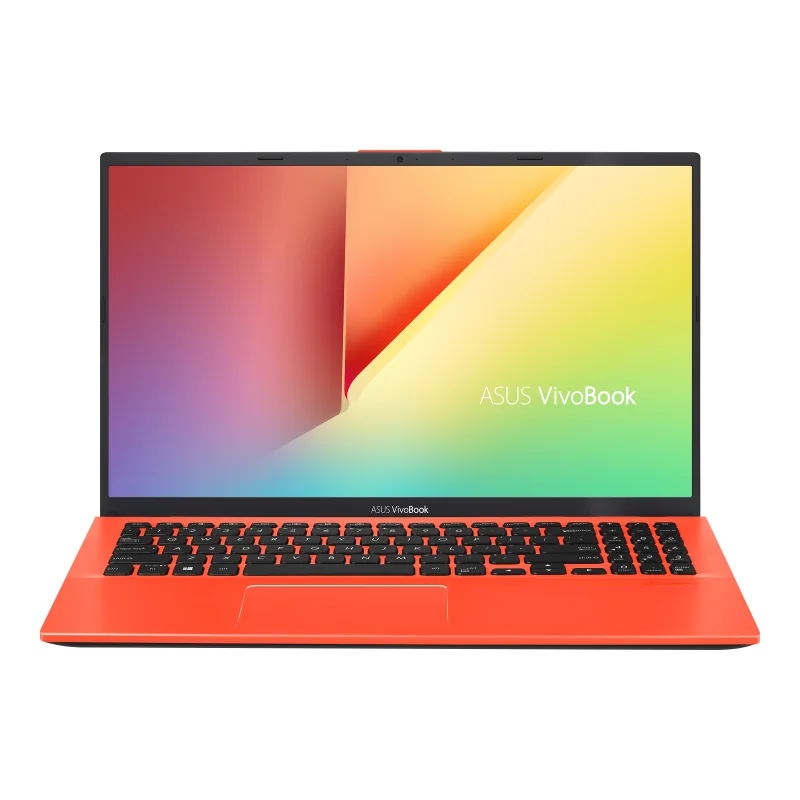
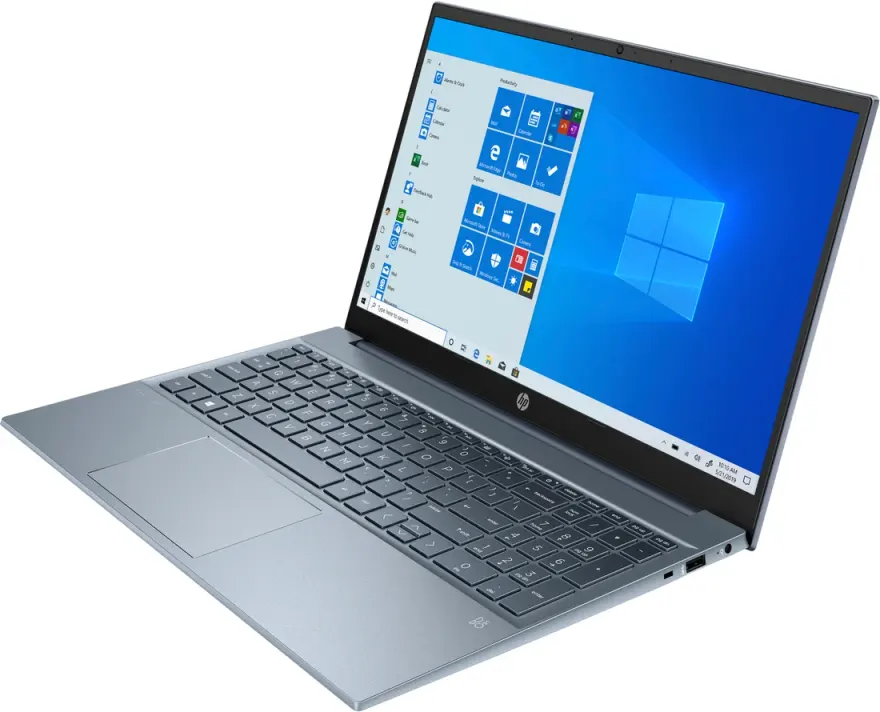
Asus VivoBook 15 X512FA i5-10210U 8GB 512GB Used Lahore
- Intel Core i5-10210U (Comet Lake, 14 nm)
- 8GB DDR4-2666 RAM · 512GB NVMe SSD
- 15.6-inch · 1920×1080 FHD IPS NanoEdge
- 5 to 7 hours
- 1.75 kg
Two budget-friendly 15.6-inch laptops — but a generation gap and 8GB difference make this less close than the names suggest.


This comparison lands at the very budget end of our shop's consultations — buyers under Rs. 80,000 budget, often first-time laptop buyers, parents buying their first child a laptop, or office workers replacing a 7-8 year old machine. The VivoBook 15 X512FA at Rs. 60,000-75,000 represents the floor of acceptable laptop performance in Pakistan in 2026 — anything significantly cheaper enters the 'don't buy this' territory of dying batteries, fake brands, or refurbished-and-relabeled junk from Chinese drop-shipping. The Pavilion 15 at Rs. 95,000-110,000 represents the comfortable middle of mainstream — meaningfully better silicon (Tiger Lake vs Comet Lake), double the RAM (16GB vs 8GB), touch screen as bonus. The Rs. 30,000+ gap between these two laptops is the difference between 'budget tight, this'll do' and 'spend a bit more, will feel snappy for 4 years'. Pakistani families with multiple students often face this trade-off — buy 2 cheap VivoBooks for two children, or buy 1 Pavilion for the oldest and let the younger use it later. We see both decisions and both work, depending on the children's actual usage needs.
| Use case | Winner | Reasoning |
|---|---|---|
| Budget university student | Asus VivoBook 15 X512FA i5-10210U 8GB 512GB Used Lahore | VivoBook 15 at Rs. 65,000-75,000 fits tight student budgets. Handles Office, browser, Zoom, basic coding. Don't pay Pavilion premium if budget is genuinely constrained. |
| Engineering student (AutoCAD, MATLAB) | HP Pavilion 15-eg0073cl i7-1165G7 16GB 512GB Touch Used Lahore | Pavilion's i7-1165G7 with Iris Xe handles AutoCAD 2D and MATLAB much better. VivoBook's Comet Lake i5 + UHD Graphics struggles with modern engineering workflows. |
| Light gaming (Valorant, CS2, Minecraft) | HP Pavilion 15-eg0073cl i7-1165G7 16GB 512GB Touch Used Lahore | Pavilion's Intel Iris Xe iGPU is 2-3x faster than VivoBook's old UHD iGPU. Valorant runs at 60 fps medium on Pavilion vs 30-40 fps low on VivoBook. |
| Office work (Excel, Word, browsing) | Tied | Both handle basic office workflows fine. VivoBook with 16GB RAM upgrade (Rs. 5,000-7,000) closes the practical gap for office use. |
| Family home laptop (shared) | HP Pavilion 15-eg0073cl i7-1165G7 16GB 512GB Touch Used Lahore | Pavilion's touch screen helps younger kids, 16GB RAM handles multiple user accounts well, and brushed-metal aesthetic suits home display. |
| Programming student learning | HP Pavilion 15-eg0073cl i7-1165G7 16GB 512GB Touch Used Lahore | Pavilion's 16GB RAM and faster Tiger Lake CPU handle VS Code, browser dev tools, and Docker containers more comfortably. Saves frustration during learning. |
| Pure-budget first laptop ever | Asus VivoBook 15 X512FA i5-10210U 8GB 512GB Used Lahore | VivoBook is the minimum acceptable laptop for getting onto the digital ladder. Better than spending less; risky to spend much less. |
VivoBook 15 X512FA i5-10210U / 8GB / 512GB at Rs. 60,000-75,000 in Lahore is fair pricing for a 2020-era budget mainstream laptop. The pricing reflects: Comet Lake i5 chip is now 5+ years old, 8GB base RAM is genuinely tight in 2026, and supply is consistent because VivoBook ships in high volumes across Asia. Above Rs. 80,000 stock-standard is a markup — you're better off paying Rs. 15,000-20,000 more for the Pavilion 15 with double the RAM and significantly faster chip. Below Rs. 60,000 indicates either fake/refurbished hardware or compromised condition. The ErgoLift hinge that tilts the keyboard slightly forward when open is a small but genuine ergonomic advantage for typing comfort over long sessions.
HP Pavilion 15 i7-1165G7 / 16GB / 512GB Touch at Rs. 95,000-110,000 in Lahore is fair pricing for a 2021-era mainstream laptop with above-average specs. The Rs. 30,000+ premium over the VivoBook 15 buys real upgrades: i7-1165G7 (Tiger Lake) vs i5-10210U (Comet Lake) is roughly 30-40% faster in real workloads, 16GB vs 8GB RAM eliminates Chrome+Zoom slowdowns, Iris Xe vs UHD Graphics is 2-3x faster for any GPU work, and touch screen is included. The premium is justified for buyers whose workflow includes multiple Chrome tabs, video calls, light gaming, or who plan to keep the laptop 4+ years. Above Rs. 115,000 stock-standard is a markup.
Mr Tariq has Rs. 75,000 for his daughter's first laptop. She's starting BBA at LCWU and will use the laptop for Office work, attending Zoom classes, browsing, watching lectures. Budget is genuinely tight — he saved for 6 months for this. We recommend the VivoBook 15 X512FA at Rs. 70,000, with an immediate Rs. 5,000 RAM upgrade to 16GB total. This stretches his Rs. 75,000 to get her a laptop that will comfortably handle her 4-year BBA program. The Pavilion would be better but Rs. 25,000+ is genuinely outside his budget.
Mr Bilal has been using a 2014 Compaq Presario for 11 years. It finally died. Budget Rs. 100,000 from his accumulated savings. He uses the laptop for Tally accounts, email, WhatsApp Web, and watching YouTube in evenings. The Pavilion 15 wins clearly here — Rs. 100,000 buys meaningfully better hardware than the VivoBook, and after 11 years on the same laptop, he deserves the upgrade. The touch screen feels novel to him (he's never used one), the snappy Tiger Lake i7 makes Tally fly, and 16GB RAM handles his moderate multitasking comfortably.
The Hassan family runs a small textile trading business in Faisalabad. They need 2 laptops — one for the father (accounts, supplier emails) and one for the son who's studying commerce. Total budget Rs. 150,000. The math favours 2 VivoBook 15s at Rs. 70,000 each (total Rs. 140,000) over 1 Pavilion + 1 cheaper alternative. Both family members get matched hardware, parts can be cannibalised between units if needed, and the budget leaves Rs. 10,000 for a wireless mouse and external HDD for backups.
Aisha bought a VivoBook X512FA 3 years ago for Rs. 80,000 when she started freelance writing. Her business has grown to Rs. 100,000+/month and she's started doing some video editing for client thumbnails. The VivoBook struggles with Premiere Pro. Budget for upgrade Rs. 100,000. The Pavilion 15 i7-1165G7 is a meaningful upgrade — handles 1080p Premiere editing acceptably, 16GB RAM is comfortable headroom, touch screen helps with quick PDF annotations for client deliverables.
Honest advice based on budget: if you have Rs. 95,000+ for a laptop, the Pavilion 15 is meaningfully better than the VivoBook 15 and the upgrade is worth every Rupee. The Tiger Lake i7 chip will feel snappy for 4+ years; the Comet Lake i5 already feels dated in 2026. If your budget is genuinely Rs. 75,000 or less, the VivoBook 15 X512FA is the rational minimum — better to have this than to overstretch the budget and have payment issues. The wrong move at any budget: paying Rs. 80,000-90,000 for the VivoBook (overpriced for its specs) or being talked into a cheaper alternative brand below Rs. 60,000 (almost always compromised hardware or short remaining battery life). For the typical Pakistani family budget of Rs. 80,000-100,000, neither laptop is perfect — we'd actually suggest stretching to Rs. 100,000-110,000 for the Pavilion if at all possible, or accepting the Rs. 70,000-75,000 VivoBook with a Rs. 5,000 16GB RAM upgrade to make it more comfortable. Either path is defensible. Both laptops carry our 15-day testing warranty with full refund or replacement on genuine fault. We always test battery, keyboard, screen, and ports before sale. For consultation on tight budgets, WhatsApp 0314 4000131 — we'll help you make the rational trade-off between budget and usability. We also stock newer Pavilion / IdeaPad generations (12th/13th gen Intel) at Rs. 130,000-180,000 used if budget allows.
| Spec | LeftAsus VivoBook 15 X512FA i5-10210U 8GB 512GB Used Lahore | RightHP Pavilion 15-eg0073cl i7-1165G7 16GB 512GB Touch Used Lahore |
|---|---|---|
CPU | Intel Core i5-10210U (Comet Lake, 14 nm) | Intel Core i7-1165G7 (Tiger Lake, 10 nm SuperFin) |
Cores / Threads | 4 cores / 8 threads, up to 4.2 GHz | 4 cores / 8 threads, up to 4.7 GHz |
RAM (default) | 8GB DDR4-2666 | 16GB DDR4-3200 |
RAM (max) | 16GB (1 SO-DIMM upgradeable + 4GB soldered) | 16GB (one slot soldered + one SO-DIMM upgradeable) |
Storage | 512GB NVMe SSD | 512GB NVMe SSD |
GPU | Intel UHD Graphics (Comet Lake iGPU) | Intel Iris Xe (96 EU) — major leap over UHD |
Display size | 15.6-inch | 15.6-inch |
Display resolution | 1920×1080 FHD IPS NanoEdge | 1920×1080 FHD IPS Touch |
Refresh rate | 60 Hz | 60 Hz |
Battery (Wh) | 37 Wh | 41 Wh |
Battery (claimed) | 5 to 7 hours | 6 to 9 hours |
Weight | 1.75 kg | 1.75 kg |
Ports | 1× USB-A 3.1, 2× USB-A 2.0, 1× USB-C, HDMI, microSD, 3.5 mm | 2× USB-A 3.1, 1× USB-C 3.2, HDMI 2.0, microSD, 3.5 mm |
Keyboard | Backlit (optional), 1.4 mm travel, full numpad, ErgoLift hinge | Backlit, 1.5 mm travel, full numpad |
Build | Plastic chassis, brushed-metal lid finish | Plastic chassis with brushed-metal lid finish |
Price (N.N Laptops Lahore) | Rs. 58,000 | Rs. 82,000 |
Best for | Budget-conscious students who need a 15.6-inch screen + numpad | Home users, students, anyone who values touch screen + i7 power |
Reliability score | 7.5 / 10 | 7.8 / 10 |
On paper these look similar; in real use they're a generation apart. The VivoBook 15 X512FA uses an i5-10210U on Intel's old 14 nm Comet Lake architecture with the previous-gen Intel UHD iGPU — fine for browsing, Office, and light coding, but it bottlenecks at video calls plus background tasks. The Pavilion 15 (i7-1165G7) uses Intel's 10 nm SuperFin Tiger Lake architecture with the Iris Xe iGPU, which is dramatically better at iGPU graphics (roughly 2× to 3× faster in Valorant, CS2, and casual games). The Pavilion also ships with 16GB RAM standard vs the VivoBook's 8GB, which is the bigger practical difference — 8GB in 2026 is genuinely tight if you run Chrome with 15+ tabs plus Zoom plus a Word doc. The VivoBook wins on price (Rs. 60,000 to 75,000 used) vs the Pavilion 15 (Rs. 95,000 to 110,000), and the VivoBook's ErgoLift hinge that tilts the keyboard forward is a small but genuinely nice touch for long typing sessions. Buy the VivoBook 15 X512FA if budget is the hard constraint and your workflow is light (browser, Word, watch lectures). Buy the Pavilion 15 if you can afford the extra Rs. 25,000 to 35,000 — the i7-1165G7 / 16GB / touch combination will feel snappier for the next 3 to 4 years.
VivoBook 15 if budget is tight (under Rs. 80,000) — it handles Office, Zoom, and browsing without complaint. Pavilion 15 if you can afford Rs. 95,000 to 110,000 — the Tiger Lake i7 plus 16GB RAM plus touch screen is genuinely smoother and will stay snappy longer. For BSc / MSc engineering students who'll run AutoCAD or MATLAB occasionally, the Pavilion is the safer pick.
Three reasons: newer 10 nm Tiger Lake CPU vs older 14 nm Comet Lake (about 20% faster per clock), much better Iris Xe iGPU (2× to 3× faster for graphics), and double the default RAM (16GB vs 8GB). The combination feels like a generation gap, not a small bump.
Yes, partially. The VivoBook 15 X512FA has 4GB soldered to the motherboard plus one SO-DIMM slot. You can replace the 4GB SO-DIMM with an 8GB or 16GB module, taking the total to 12GB or 20GB. The maximum supported is 16GB via 4GB soldered + 12GB SO-DIMM — but 8GB + 8GB SO-DIMM = 12GB is the more common path. We do upgrades for free with part purchase.
Pavilion 15 wins slightly. 41 Wh vs 37 Wh battery, and the 10 nm Tiger Lake i7 is more efficient than the 14 nm Comet Lake i5. Real-world the Pavilion gives 6 to 9 hours, the VivoBook 5 to 7 hours. Neither is an 'all-day' laptop — both are charge-overnight machines.
Both are plastic chassis with brushed-metal lids. We see slightly more hinge cracks on the VivoBook in our repair shop because the plastic around the hinge mounts is thinner. The Pavilion is marginally more solid. Neither is a 'premium' build — buyers who need that should look at the ZBook, EliteBook, or ThinkPad lines.
Officially yes — the i5-10210U is on Microsoft's Windows 11 supported CPU list. The laptop has TPM 2.0 and Secure Boot. Performance under Windows 11 is similar to Windows 10. We typically install Windows 11 Home on every laptop we sell unless the customer specifically requests Windows 10.
With reasonable care (no liquid spills, careful keyboard use, regular cleaning of dust from vents) — both should run for 4-5 years before needing significant repairs. The VivoBook may show wear earlier (plastic flex, hinge stress). The Pavilion is marginally more solid. Battery replacement around year 3 is normal for both (Rs. 5,000-8,000).
Partially. VivoBook 15 X512FA: 4GB soldered + 1 SO-DIMM slot. Replace the 4GB SO-DIMM with 8GB/16GB to reach 12GB/20GB total (max 16GB official). Pavilion 15: 8GB soldered + 1 SO-DIMM slot. Add 8GB SO-DIMM to reach 16GB total (already 16GB on the i7 model). Upgrades are free at our shop with part purchase.
Yes, both. Zoom, Microsoft Teams, Google Meet all work fine on these laptops. The webcams are 720p HD (mediocre but acceptable). The Pavilion's touch screen helps if students prefer touching slides during class. Internal speakers are weak — invest Rs. 1,500-3,000 in cheap headphones for clear audio.
Pavilion 15 — yes, for 1080p with simple cuts. iMovie equivalent (Windows Photos app, DaVinci Resolve free) works acceptably. Exports take 4-6x real-time. VivoBook 15 — yes for very basic editing only. The UHD iGPU is significantly slower. Both struggle with 4K or anything beyond simple cuts.
VivoBook 15 X512FA: 5-7 hours with browser + Office (mixed use). Pavilion 15: 6-9 hours similar use. Neither is an 'all-day' laptop. Both fully recharge in 90 minutes from flat state, which suits Pakistani load-shedding routines well.
Pavilion 15 wins clearly — B&O-tuned stereo speakers produce noticeably better bass and clarity. VivoBook 15's downward-firing speakers are quiet and tinny. Neither replaces decent headphones (Rs. 1,500-3,000) for music or movies.

One email per month, max. We tell you what new used laptops just landed at Hafeez Center, with prices. Skip the WhatsApp-spam — read on your own time. Unsubscribe in one click.