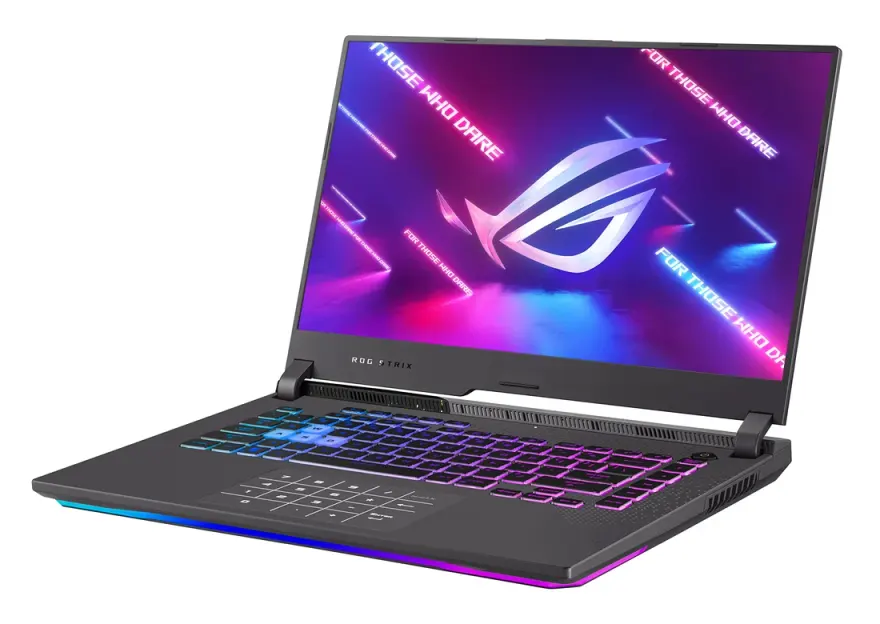
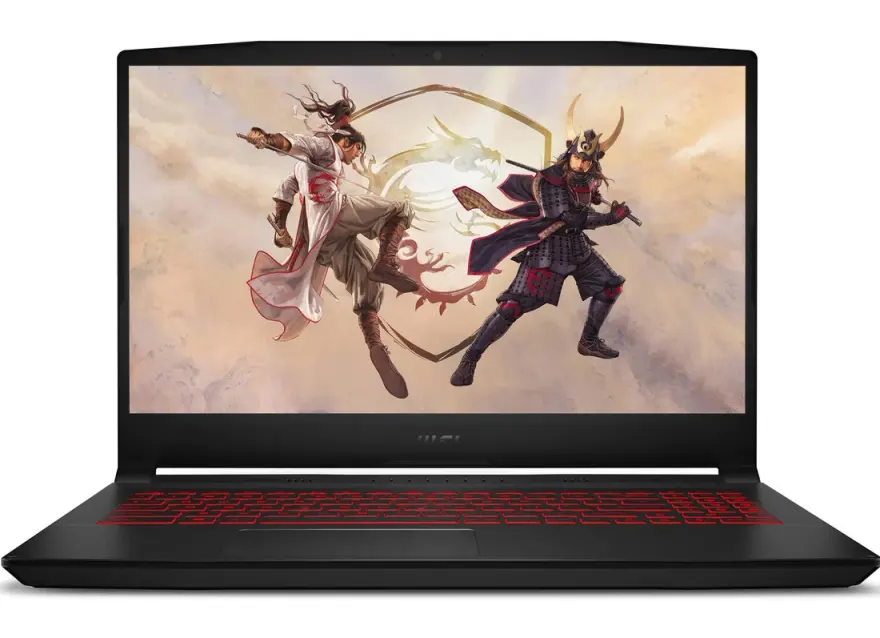
Asus ROG Strix G15 G513RM Ryzen 7 6800H 16GB 1TB RTX 3060 Lahore
- AMD Ryzen 7 6800H (Zen 3+, 6 nm)
- 16GB DDR5-4800 RAM · 1TB NVMe SSD
- 15.6-inch · 1920×1080 FHD IPS 165 Hz, 100% sRGB
- 5 to 7 hours productivity / 1.5 to 2 hours gaming
- 2.30 kg
Two RTX 3060 mid-range gaming laptops — Asus's ROG ecosystem vs MSI's value-aggressive Katana line. Which wins for Pakistani gamers in 2026?


The ROG Strix G15 vs Katana GF66 question splits the Pakistani mid-range gaming buyer segment along clear lines. Both target the Rs. 195,000-240,000 price bracket that captures serious gamers, gaming-focused engineering/CS students with parental support, and young professionals upgrading from RTX 3050 budget gaming laptops. The ROG Strix G15 has stronger brand cachet in Pakistan's gaming community — the ROG ecosystem (Armoury Crate software, Aura RGB sync with other ROG accessories, the iconic light bar) creates lock-in for gamers who want a cohesive setup. MSI Katana is positioned as the 'value alternative' — same GPU, similar performance, lower price, less ecosystem polish. Both arrive in Pakistan via authorised dealer channels (Asus Pakistan, MSI Pakistan) and grey-market imports. New-laptop pricing at Karachi's Saddar wholesale market runs Rs. 25,000-35,000 above our used pricing for both. Pakistani gaming buyers in this segment typically fall into three profiles: serious gamers (typically 18-25 years old) who care about competitive FPS and aesthetic polish (favours Strix), engineering/CS students balancing gaming with development workloads (favours Katana for multi-thread CPU), and young IT professionals upgrading from older gaming laptops (split roughly evenly). Both laptops draw 230-280W under gaming load — Pakistani power-grid considerations matter: a Rs. 4,000-6,000 surge protector is strongly recommended to handle K-Electric / Lesco voltage fluctuations that can damage gaming AC adapters. Cooling pad (Rs. 2,500-4,000) recommended for both during Pakistani summer.
| Use case | Winner | Reasoning |
|---|---|---|
| Competitive esports (Valorant, CS2, Apex Legends) | Asus ROG Strix G15 G513RM Ryzen 7 6800H 16GB 1TB RTX 3060 Lahore | Strix G15's 165 Hz panel + higher sustained FPS from 105W GPU TGP + DDR5 memory bandwidth deliver competitive advantage. The 1% low frametimes are more consistent for ranked play. Katana's 144 Hz is fine but the Strix has the edge. |
| AAA single-player gaming (Cyberpunk, Elden Ring, RDR2) | Asus ROG Strix G15 G513RM Ryzen 7 6800H 16GB 1TB RTX 3060 Lahore | Strix G15 wins by 10-15% in sustained AAA gaming due to higher GPU TGP and better thermals. The 100% sRGB panel also makes visuals look noticeably richer in HDR-emulated titles. |
| Software development with heavy parallel compiles | MSI Katana GF66 i7-12700H 16GB 1TB | Katana's i7-12700H 14-core / 20-thread is 30-40% faster than Strix's Ryzen 7 6800H 8-core / 16-thread in compilation, Docker builds, and CI/CD workloads. The Rs. 40,500 savings funds dev tools and accessories. |
| Video editing (Premiere Pro, DaVinci Resolve) | Asus ROG Strix G15 G513RM Ryzen 7 6800H 16GB 1TB RTX 3060 Lahore | Strix G15's 100% sRGB panel matters for colour-accurate editing (Katana's standard sRGB drifts noticeably). Higher GPU TGP helps DaVinci Resolve renders. Bigger 90 Wh battery handles longer editing sessions unplugged. |
| ML / data science (CUDA, PyTorch local training) | MSI Katana GF66 i7-12700H 16GB 1TB | Both have RTX 3060 6GB for CUDA. Katana's i7-12700H 14-core CPU dramatically outperforms Strix's Ryzen 7 8-core in data preprocessing and CPU-bound ML pipelines. For local model training and Jupyter notebooks, Katana is the smarter pick. |
| Streaming (Twitch / YouTube Live while gaming) | Asus ROG Strix G15 G513RM Ryzen 7 6800H 16GB 1TB RTX 3060 Lahore | Strix G15's 105W GPU sustains higher in-game FPS while NVENC encoding handles streaming. Better thermals reduce frame drops during long streaming sessions. ROG ecosystem includes streaming overlays in Armoury Crate. |
| Long-term ownership (4-5 years) | Tied | Strix G15's DDR5 RAM and 100% sRGB panel age better. Katana's lower starting price compensates for slightly faster aesthetic obsolescence. Both will handle AAA gaming at 1080p high through 2028+. |
The Asus ROG Strix G15 G513RM Ryzen 7 6800H / 16GB DDR5 / 1TB / RTX 3060 / 165Hz 100% sRGB at Rs. 235,000 in Lahore is fair pricing for a 2022-era mid-range gaming laptop in 2026. The price reflects 4 years of depreciation from new (~Rs. 320,000 retail in 2022), Asus's brand premium in Pakistan's gaming community, and the ROG ecosystem polish. Above Rs. 250,000 stock-standard is a markup — at that price you're approaching the newer 2023-2024 ROG variants with RTX 4060/4070. Below Rs. 220,000 may indicate downgraded specs (lower RAM, smaller SSD) or significant battery wear from heavy gaming use. The G513QM variant with older Ryzen 5800H + DDR4 at Rs. 175,000-195,000 closes the gap with the Katana significantly, making the G513QM a value pick for budget-conscious gamers who specifically want the ROG ecosystem.
The MSI Katana GF66 i7-12700H / 16GB DDR4 / 1TB / RTX 3060 / 144Hz at Rs. 194,500 in Lahore is excellent value for a 2022-era mid-range gaming laptop. The Rs. 40,500 discount vs the Strix G15 is significant — that's a 17% savings on a major purchase. The Katana's i7-12700H 14-core CPU delivers genuinely better multi-threaded performance than the Strix's Ryzen 7 6800H, which matters for users who do more than just game. Above Rs. 210,000 stock-standard is a markup. Below Rs. 180,000 may indicate downgraded specs or significant battery wear. The MSI Katana 17 variant (17.3-inch screen, otherwise similar specs) at Rs. 210,000-230,000 is a worthwhile step up for buyers who want a larger display for productivity work. MSI's Pakistan service presence is slightly weaker than Asus's — factor in that warranty repairs may take longer if needed.
Ali is a 22-year-old gaming enthusiast in Karachi who's been saving for 2 years. Budget Rs. 240,000. His primary use is AAA single-player gaming (Cyberpunk, Elden Ring, RDR2, Horizon Forbidden West) plus competitive Valorant on weekends. The ROG Strix G15 wins clearly for him — the 105W GPU TGP delivers visibly better AAA gaming performance, the 100% sRGB panel makes games look richer, the 165 Hz refresh rate gives competitive edge in Valorant, and the ROG ecosystem aligns with his gaming-first aesthetic. The Rs. 40,500 premium over Katana is justified for his use case.
Hassan is a 3rd-year CS student at FAST Lahore. Budget Rs. 200,000 from his father. His use is 50% gaming (Valorant, AAA single-player on weekends), 50% development (web projects in VS Code, occasional Docker, learning ML with PyTorch). The Katana GF66 wins clearly — the i7-12700H 14-core CPU dramatically helps compilation and Docker builds, the RTX 3060 6GB handles his gaming well, and the Rs. 40,500 saved vs the Strix funds a 32GB RAM upgrade, a mechanical keyboard, and a year of GitHub Pro subscription.
Saad earns Rs. 150,000/month editing YouTube videos for international clients. Budget Rs. 240,000 for hardware upgrade. His use is 70% video editing in DaVinci Resolve (1080p timelines, occasional 4K), 30% AAA gaming for relaxation. The Strix G15 wins narrowly — the 100% sRGB panel is essential for colour-accurate client work (Katana's standard sRGB drifts noticeably in client deliverables), the DDR5 RAM helps DaVinci Resolve scrubbing, and the 90 Wh battery handles longer editing sessions on his apartment balcony. The Rs. 40,500 premium pays back via more accurate colour grading reducing client revision rounds.
Bilal is studying machine learning at IBA Karachi and needs local CUDA acceleration for training small models (he can't always afford cloud compute). Budget Rs. 200,000. The Katana GF66 wins decisively — the i7-12700H 14-core CPU dramatically accelerates data preprocessing pipelines that bottleneck before reaching the GPU, RTX 3060 6GB CUDA is sufficient for student-scale ML projects, and the Rs. 40,500 saved funds a year of GPU cloud credits for larger experiments. The Strix's gaming-focused tuning doesn't help his ML use case.
Our honest take: for pure gaming, the Asus ROG Strix G15 wins — better GPU TGP (105W vs 95W), faster panel (165 Hz vs 144 Hz), better panel quality (100% sRGB), DDR5 RAM, larger battery, and the ROG ecosystem polish. For mixed gaming + heavy multi-threaded work (development, video editing, ML), the MSI Katana GF66 wins — i7-12700H 14-core CPU dramatically outperforms Ryzen 7 6800H 8-core in compilation/encoding/training, and the Rs. 40,500 saved is meaningful money. We sell roughly 65% Strix G15s and 35% Katana GF66s in this comparison bracket — the Strix's gaming reputation and ROG brand cachet are strong in Pakistan's gaming community. Both are excellent mid-range gaming laptops with 4-5 year useful life. Both need a Rs. 2,500-4,000 cooling pad for Pakistani summer (Lahore/Karachi heat reduces sustained gaming performance without one). Both should pair with a Rs. 4,000-6,000 surge protector for the 230-280W AC adapters that K-Electric / Lesco voltage fluctuations can damage. Both carry our 15-day testing warranty with full refund or replacement on any genuine fault. We run 30-minute thermal stress tests on every gaming laptop before sale and provide written temperature documentation. For consultation on which fits your specific gaming/work mix, WhatsApp 0314 4000131 — we'll ask about your primary use cases (which games, which dev workloads, what creative tools), then recommend the rational choice. Also worth considering at Rs. 195,000-240,000 budget: a desktop with the same CPU/GPU performs 25-35% better and lasts longer; if portability isn't critical, desktop is the smarter buy. COD available in Lahore; secure courier nationwide.
| Spec | LeftAsus ROG Strix G15 G513RM Ryzen 7 6800H 16GB 1TB RTX 3060 Lahore | RightMSI Katana GF66 i7-12700H 16GB 1TB |
|---|---|---|
CPU | AMD Ryzen 7 6800H (Zen 3+, 6 nm) | Intel Core i7-12700H (Alder Lake-H, 10 nm Intel 7) |
Cores / Threads | 8 cores / 16 threads, up to 4.7 GHz | 14 cores (6P + 8E) / 20 threads, up to 4.7 GHz |
RAM (default) | 16GB DDR5-4800 | 16GB DDR4-3200 |
RAM (max) | 64GB (2× SO-DIMM) | 64GB (2× SO-DIMM) |
Storage | 1TB NVMe SSD | 1TB NVMe SSD |
GPU | NVIDIA RTX 3060 6GB GDDR6, 105 W TGP | NVIDIA RTX 3060 6GB GDDR6, 95 W TGP |
Display size | 15.6-inch | 15.6-inch |
Display resolution | 1920×1080 FHD IPS 165 Hz, 100% sRGB | 1920×1080 FHD IPS 144 Hz |
Refresh rate | 165 Hz | 144 Hz |
Battery (Wh) | 90 Wh | 53 Wh |
Battery (claimed) | 5 to 7 hours productivity / 1.5 to 2 hours gaming | 3 to 5 hours productivity / 1 hour gaming |
Weight | 2.30 kg | 2.25 kg |
Ports | 2× USB-A 3.2, 2× USB-C (1 with DP), HDMI 2.0b, RJ45, 3.5 mm | 3× USB-A 3.2, 1× USB-C 3.2 (with DP), HDMI 2.0, RJ45, 3.5 mm |
Keyboard | Per-key Aura RGB, 1.7 mm travel, anti-ghosting, ROG hotkeys | Single-zone red backlit, 1.7 mm travel, dedicated MSI Center key |
Build | Plastic with stylised lid, RGB light bar across front hinge | Plastic with subtle gaming aesthetics, dual-fan dual-exhaust cooling |
Price (N.N Laptops Lahore) | Rs. 235,000 | Rs. 194,500 |
Best for | Gaming enthusiasts, ROG ecosystem users, RGB lovers, content creators wanting 100% sRGB | Value-conscious gamers, multi-threaded workload users, anyone wanting i7-12700H performance under Rs. 200,000 |
Reliability score | 8.4 / 10 | 8.0 / 10 |
Both are mid-range gaming laptops with the same RTX 3060 6GB GPU, similar 16GB RAM and 1TB SSD configs, but they target different priorities. The Asus ROG Strix G15 (G513RM) is the gaming-first pick — higher GPU TGP at 105 W (vs Katana GF66's 95 W), the better 165 Hz 100% sRGB panel (vs Katana's 144 Hz standard sRGB), DDR5-4800 RAM (vs Katana's DDR4-3200), and the much larger 90 Wh battery (vs Katana's 53 Wh). The Strix also has the per-key Aura RGB ecosystem and the iconic ROG light bar across the front. The Ryzen 7 6800H's 8 cores / 16 threads handles modern gaming and creative workloads cleanly. The MSI Katana GF66 wins on raw CPU compute — the i7-12700H has 14 cores (6P + 8E) / 20 threads, beating the Ryzen 7 6800H by 30-40% in heavily multi-threaded workloads (video encoding, compiling, ML training). The Katana is also lighter (2.25 kg vs 2.30 kg) and Rs. 40,500 cheaper at our shop (Rs. 194,500 vs Rs. 235,000) — a meaningful value gap. For pure gaming, the Strix G15 wins clearly thanks to the higher GPU TGP, faster RAM, better panel, and bigger battery. For mixed gaming + heavy multi-threaded work (developers, video editors, ML students), the Katana's i7-12700H + lower price is the smarter buy. Both are excellent 4-5 year gaming machines that will handle modern AAA games at 1080p high settings through 2028+.
ROG Strix G15 wins for pure gaming. Higher GPU TGP (105 W vs Katana's 95 W) delivers 8-12% more sustained FPS in GPU-bound titles. 165 Hz 100% sRGB panel beats Katana's 144 Hz standard sRGB. DDR5-4800 RAM (vs DDR4-3200) helps gaming memory bandwidth by 10-15%. Larger 90 Wh battery handles longer unplugged sessions. The Strix is the gaming-enthusiast's pick.
Three things: CPU compute (i7-12700H 14-core / 20-thread beats Ryzen 7 6800H 8-core / 16-thread by 30-40% in multi-threaded workloads), price (Rs. 194,500 vs Strix's Rs. 235,000 — Rs. 40,500 cheaper), and weight (2.25 kg vs 2.30 kg). For developers, video editors, ML students, and anyone who values multi-threaded performance over gaming-specific tuning, the Katana is the value pick.
DDR5-4800 (Strix G15) delivers roughly 50% more memory bandwidth than DDR4-3200 (Katana). In gaming, this translates to 5-15% higher 1% low FPS and smoother frametime consistency in CPU-bound titles. The improvement is most visible in esports games (CS2, Valorant, Apex) where memory bandwidth affects competitive frame stability. For pure AAA single-player gaming where GPU is the bottleneck, the RAM difference matters less (3-5% FPS gain).
No — TGP matters. The Strix G15's RTX 3060 runs at 105 W; the Katana's runs at 95 W. The Strix delivers 8-12% higher sustained FPS in GPU-bound titles. The Strix's better cooling (triple-fan in some variants) sustains the higher TGP without thermal throttling. For Cyberpunk 2077 1080p high settings: Strix at 70-80 fps vs Katana at 60-70 fps. For competitive 165 Hz / 144 Hz play, the Strix's higher framerate ceiling matters.
Asus ROG Strix G15 G513RM Ryzen 7 6800H / 16GB DDR5 / 1TB / RTX 3060 / 165Hz 100% sRGB at Rs. 235,000. MSI Katana GF66 i7-12700H / 16GB DDR4 / 1TB / RTX 3060 / 144Hz at Rs. 194,500. The Rs. 40,500 gap reflects the Strix's better panel (165Hz 100% sRGB), DDR5 RAM, higher GPU TGP, larger battery, and ROG ecosystem. For gaming-focused buyers, the gap is justified. For value-focused buyers with mixed workloads, the Katana is the smarter pick. WhatsApp 0314 4000131 for current stock.
Yes, both. RTX 3060 6GB handles Cyberpunk 2077 at 1080p high settings 60-70 fps with DLSS, Red Dead Redemption 2 at 1080p high 60-70 fps, GTA V at 1080p maxed 100+ fps, Forza Horizon 5 at 1080p extreme 80+ fps, Elden Ring at 1080p high 60 fps capped, Hogwarts Legacy at 1080p high 50-60 fps. AAA gaming at maxed 1080p is comfortable on both. For 1440p gaming, both work but at medium-high settings only.
Yes for competitive esports, marginal for AAA. For competitive titles (Valorant, CS2, Apex, Fortnite, PUBG, Overwatch 2), RTX 3060 6GB will easily handle 144 Hz / 165 Hz at 1080p through 2028 and beyond. For AAA single-player at 1080p, expect to drop from high settings to medium settings around 2027-2028 to maintain 60+ fps in the most demanding titles. 6GB VRAM is the bigger long-term concern — modern AAA games are hitting 6GB ceiling at 1080p ultra in 2025+.
Modestly. DDR5-4800 (Strix G15) delivers 50% more memory bandwidth than DDR4-3200 (Katana). Real-world gaming impact: 5-15% higher 1% low FPS in CPU-bound titles (Valorant, CS2, modern AAA in CPU-heavy scenes). For GPU-bound AAA at high settings, the difference shrinks to 3-5%. For non-gaming workloads (development, video editing), DDR5 helps memory-intensive operations by 10-20%. Meaningful but not transformative.
Yes on both. Strix G15 has 2 SO-DIMM DDR5 slots (one populated with 16GB) supporting 64GB total — adding second 16GB DDR5 stick is Rs. 18,000-22,000. Katana has 2 SO-DIMM DDR4 slots (one populated with 16GB) supporting 64GB total — adding second 16GB DDR4 stick is Rs. 10,000-12,000 (DDR4 is significantly cheaper). Both have dual M.2 NVMe slots (one populated with 1TB) supporting expansion to 2TB or 4TB second drive.
Strix G15 (90 Wh): 5-7 hours productivity (browser, Office, video), 1.5-2 hours gaming with significant FPS throttling. Katana GF66 (53 Wh): 3-5 hours productivity, 1 hour gaming throttled. The Strix wins clearly on battery — the 90 Wh capacity vs Katana's 53 Wh is a 70% capacity advantage. Neither is an 'all-day' laptop. Treat both as plugged-in performance machines that occasionally work unplugged.
Both have dual-fan dual-exhaust cooling. Strix G15's triple-fan variant (some BTO configs) handles sustained AAA gaming better in 40°C+ ambient temperatures. Katana's standard dual-fan can struggle in extreme heat — recommend Rs. 2,500-4,000 cooling pad. Both run loud under sustained gaming load (45-50 dB fan noise) — invest in good headphones (Rs. 8,000-15,000 Razer Kraken / HyperX Cloud II) to drown out fan noise.
Both handle 1080p editing in Premiere Pro / DaVinci Resolve comfortably. Strix G15 wins for colour-accurate work because of 100% sRGB panel (Katana's standard sRGB drifts noticeably in client deliverables). For 4K editing, both work but push the RTX 3060 6GB VRAM to its limits — frequent VRAM-out errors with complex effect stacks. For serious content creation, step up to RTX 4060 / 4070 laptop variants (Rs. 280,000+) or use external GPU enclosures.
Yes — both meet Oculus Link / Steam VR recommended specs. RTX 3060 6GB handles Half-Life Alyx, Beat Saber, Microsoft Flight Simulator VR, Asgard's Wrath comfortably at 90 fps. For Air Link wireless VR, both need a strong Wi-Fi 6 router (Rs. 12,000-25,000 — Asus / Netgear at Hafeez Center) for reliable wireless VR. The Strix G15's slightly higher GPU TGP gives marginal advantage in VR titles.

One email per month, max. We tell you what new used laptops just landed at Hafeez Center, with prices. Skip the WhatsApp-spam — read on your own time. Unsubscribe in one click.