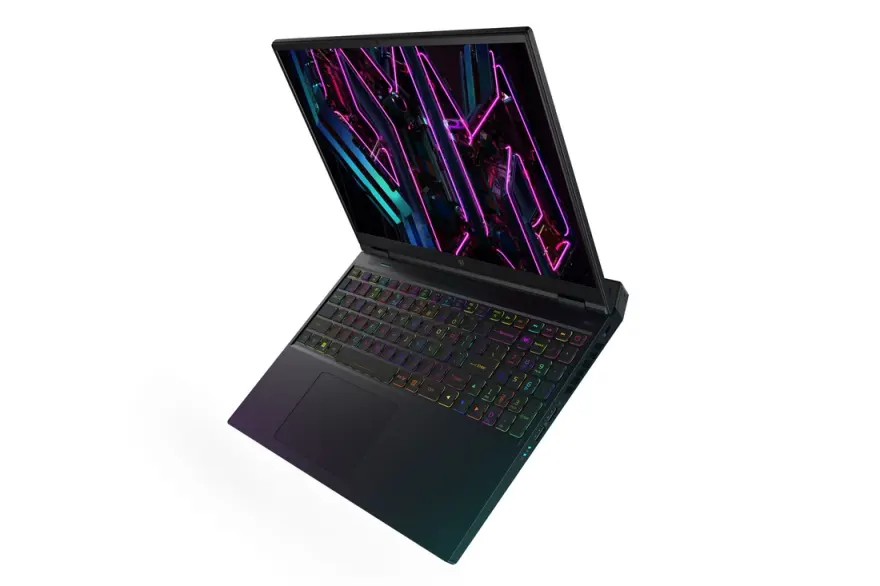
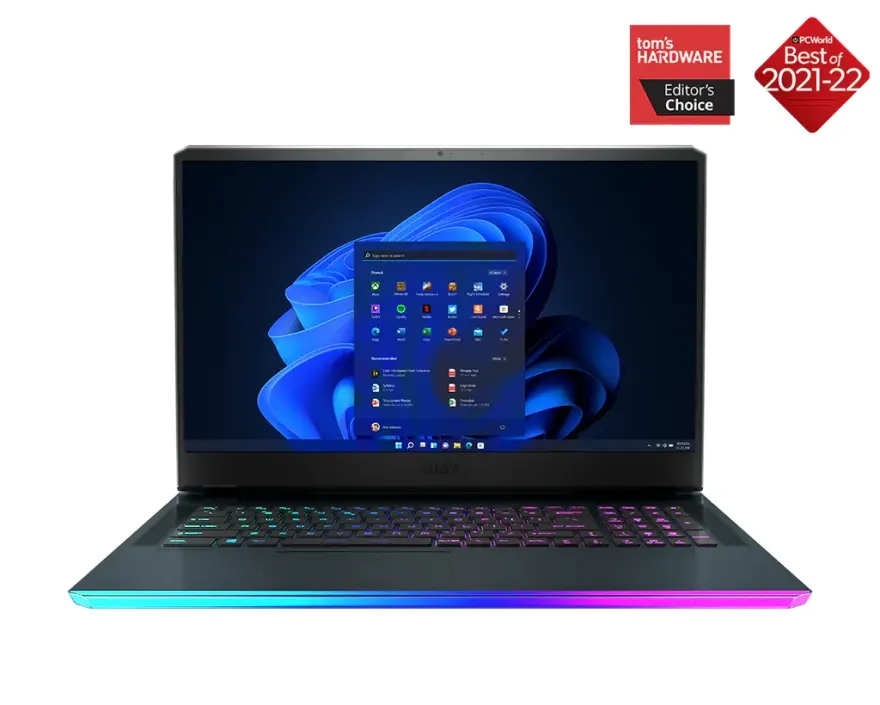
Acer Predator Helios 16 or MSI Raider GE76 for flagship gaming in Pakistan?
+
MSI Raider GE76 wins for pure flagship gaming. Better sustained thermals (dual Cooler Boost 5 + 7 heat pipes + vapour chamber) deliver higher sustained FPS in long AAA sessions. The 17.3-inch 240 Hz panel is dramatic for competitive esports. 32GB DDR5 default RAM matches gaming creator workloads. Acer Helios 16 wins on value — RTX 4070 (newer generation) outperforms RTX 3070 Ti by 10-15% in modern AAA at meaningfully lower price (Rs. 50,000-60,000 cheaper).
RTX 4070 vs RTX 3070 Ti — which is better for gaming?
+
RTX 4070 wins overall. Newer Ada Lovelace architecture delivers 10-15% better performance per watt, DLSS 3 frame generation support (RTX 3070 Ti only supports DLSS 2), and similar 8GB VRAM. The RTX 3070 Ti's higher 150W TGP partially closes the gap but the newer architecture and DLSS 3 give RTX 4070 the edge in modern titles (Cyberpunk 2077, Alan Wake 2, Hogwarts Legacy). For older titles or pure raster performance, the gap is smaller (5-8%).
How do their thermals compare?
+
MSI Raider GE76 wins decisively. Its dual Cooler Boost 5 fans with 7 heat pipes and large vapour chamber sustain RTX 3070 Ti at full 150W TGP for hours without thermal throttling. The Acer Helios 16's dual AeroBlade 3D fans + vapour chamber sustain RTX 4070 at 140W TGP but reach thermal limits faster in extended sessions, occasionally dropping to 120-125W under sustained load. For 4-hour AAA gaming sessions, the Raider GE76 holds higher sustained FPS.
Which has better display for competitive esports?
+
MSI Raider GE76 wins for competitive esports. The 17.3-inch QHD (2560×1440) 240 Hz panel delivers dramatically smoother motion than the Helios 16's 16-inch 2.5K (2560×1600) 165 Hz. For Valorant, CS2, Apex, Fortnite, Overwatch 2 at competitive levels, 240 Hz is a meaningful advantage over 165 Hz. For AAA single-player gaming where 60-120 fps is normal, the Helios 16's resolution edge (1600 vertical pixels vs 1440) wins.
Price difference at N.N Laptops Lahore?
+
Acer Predator Helios 16 PH16-71 i7-13700HX / 16GB / 1TB / RTX 4070 / 2.5K 165Hz at Rs. 295,000-355,000. MSI Raider GE76 i9-12900HK / 32GB / 1TB / RTX 3070 Ti / 17.3-inch 1440p 240Hz at Rs. 345,000-415,000. The Rs. 50,000-60,000 gap reflects the Raider's 32GB default RAM (vs Helios 16GB), larger 17.3-inch QHD 240 Hz panel, brushed-aluminium chassis, and superior cooling. For matched RAM configs (Helios 16 upgraded to 32GB), the gap narrows to Rs. 30,000-40,000.
Can these run modern AAA games at maxed-out 1440p/2.5K settings?
+
Yes, both. Helios 16's RTX 4070 + DLSS 3: Cyberpunk 2077 at 2.5K maxed + ray tracing 60-80 fps, Hogwarts Legacy at 2.5K ultra 60-75 fps, Alan Wake 2 at 2.5K high 55-65 fps. Raider GE76's RTX 3070 Ti + DLSS 2: Cyberpunk 2077 at 1440p maxed 50-65 fps, Hogwarts Legacy at 1440p ultra 55-70 fps, Alan Wake 2 at 1440p high 45-55 fps. Both excellent for AAA gaming through 2027-2028.
How long will RTX 4070 and RTX 3070 Ti remain relevant?
+
RTX 4070: capable of maxed AAA gaming at 1440p through 2027-2028, then medium-high settings through 2029-2030. DLSS 3 support extends practical relevance significantly. RTX 3070 Ti: capable of maxed 1440p AAA through 2027, then medium settings through 2028-2029. Both will remain competitive for 1080p competitive esports through 2030+. The 8GB VRAM ceiling becomes increasingly limiting in 2027+.
DDR5-4800 RAM — does it matter for flagship gaming?
+
Modestly. DDR5-4800 (both laptops) delivers 50% more memory bandwidth than DDR4-3200 (older flagship gaming laptops). Real-world gaming impact: 5-15% higher 1% low FPS in CPU-bound titles (Valorant, CS2, modern AAA in CPU-heavy scenes), 3-5% in GPU-bound AAA gaming. For non-gaming workloads (video editing, content creation), DDR5 helps memory-intensive operations 10-20%. Both being DDR5 means RAM speed isn't a differentiator between them.
Can I upgrade RAM and SSD on both?
+
Yes on both. Helios 16 has 2 SO-DIMM DDR5 slots (one populated with 16GB) supporting 32GB total — adding second 16GB DDR5 stick is Rs. 20,000-25,000. Raider GE76 has 2 SO-DIMM DDR5 slots (both populated with 16GB = 32GB total) supporting expansion to 64GB by replacing both sticks with 32GB modules (Rs. 45,000-60,000). Both have dual M.2 NVMe slots supporting expansion to 2TB or 4TB second drive.
Battery life — realistic numbers under heavy use?
+
Both: 4-6 hours productivity (browser, Office, video watching), 1-1.5 hours AAA gaming with significant FPS throttling (gaming on battery is not recommended). The Raider GE76's slightly larger 99.9 Wh battery vs Helios 16's 90 Wh delivers marginal advantage (5-10 minutes extra). Both are plug-in-during-gaming laptops by design. Treat both as desk-bound flagship gaming machines that occasionally work unplugged for productivity.
Cooling under Pakistani 40°C summer conditions?
+
Both struggle in Pakistani summer ambient 40°C+ conditions without active cooling assistance. CPU peak temperatures rise 5-8°C above benchmark room temperatures (20-25°C). Strongly recommended: Rs. 4,000-6,000 cooling pad with dual 14cm fans, raise laptop 4-5cm above desk surface, ensure good ambient airflow. Without cooling pad, expect 10-15% sustained performance loss due to thermal throttling. The Raider GE76's superior cooling handles Pakistani heat marginally better than Helios 16.
VR gaming compatibility (Quest 3 via Air Link, Steam VR)?
+
Yes — both meet flagship VR specs. RTX 4070 (Helios) and RTX 3070 Ti (Raider) handle Half-Life Alyx, Microsoft Flight Simulator VR, Asgard's Wrath 2, Resident Evil 4 VR comfortably at 90 fps. For Air Link wireless VR via Quest 3, both need strong Wi-Fi 6E router (Rs. 18,000-30,000 — Asus ROG Rapture / Netgear Nighthawk at Hafeez Center). The Helios 16's RTX 4070 newer architecture gives marginal advantage in modern VR titles.
Streaming performance — Helios 16 vs Raider GE76?
+
Raider GE76 wins for serious streaming. The 32GB default RAM handles OBS + game + Discord + Chrome + sponsorship browser without memory pressure. Superior thermals sustain longer streaming sessions without throttling. NVENC encoding on RTX 3070 Ti handles 1080p 60 fps streaming with minimal impact. Helios 16 streams adequately on 16GB RAM but you'll notice memory pressure with multi-game streaming setups or heavy chat overlays.